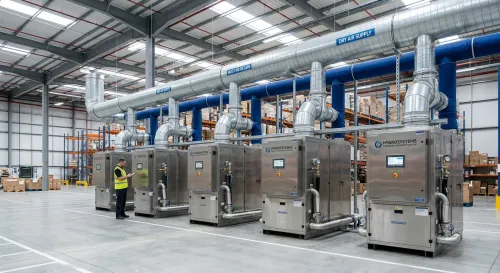

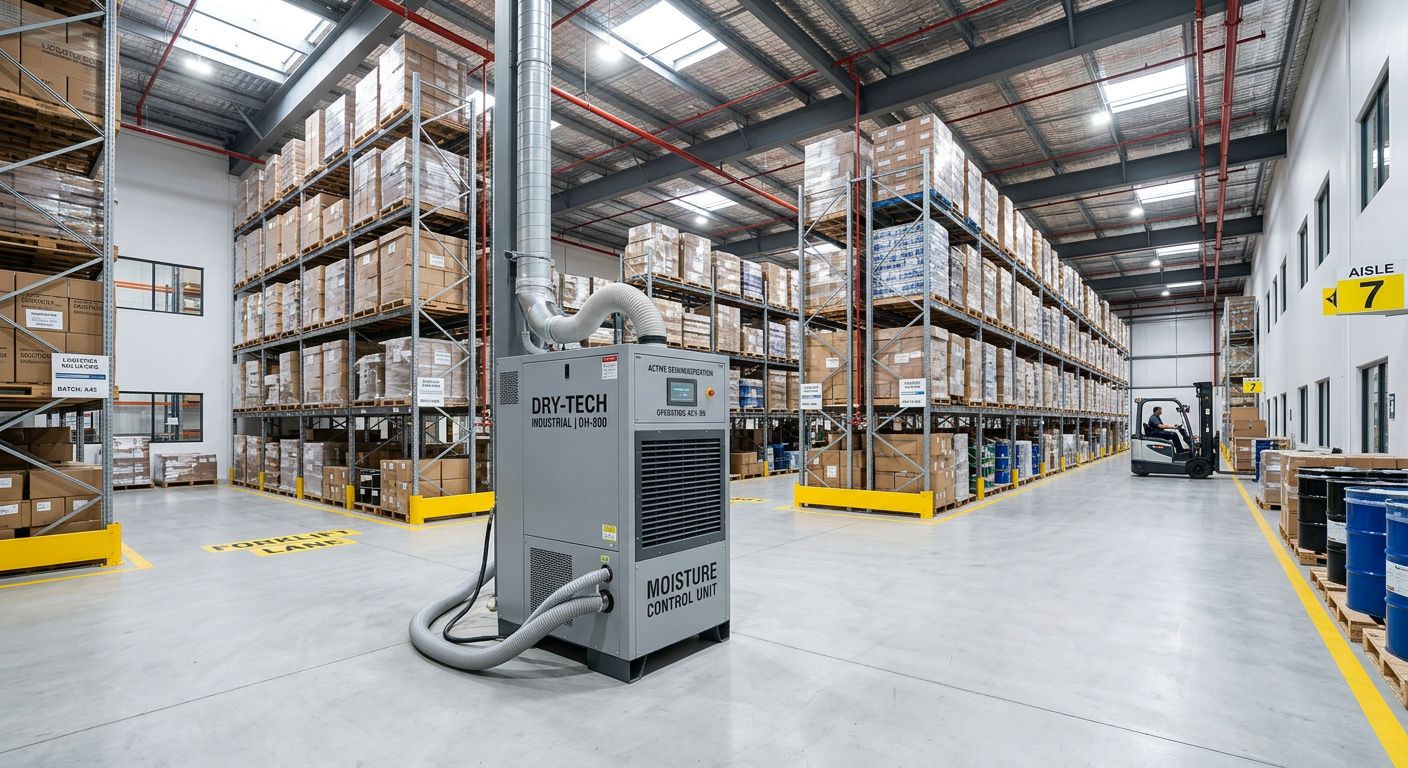
High humidity inside warehouses can create serious challenges for businesses that need to store products, raw materials, packaging, machinery, and other sensitive materials under controlled conditions. Excess moisture in the air can lead to condensation, corrosion, mould growth, damp packaging, unpleasant odours, and gradual product deterioration. Over time, these issues can affect product quality, increase maintenance requirements, and result in unnecessary operational costs.
For warehouses operating in humid climates, maintaining the right indoor humidity level is especially important. Proper moisture management helps create a more stable storage environment and reduces the risk of damage caused by excessive moisture. Whether you operate a manufacturing warehouse, distribution centre, cold storage facility, pharmaceutical warehouse, food storage area, or general-purpose storage facility, effective humidity control can play an important role in protecting your inventory.
Why Humidity Control Matters in Warehouses
Humidity refers to the amount of water vapour present in the air. When humidity levels become too high, moisture can accumulate on surfaces and materials. Temperature fluctuations can make the problem worse, particularly when warm, humid air comes into contact with cooler walls, floors, ceilings, equipment, or stored products.
Condensation is one of the most common problems associated with excessive warehouse humidity. When the surface temperature falls below the dew point of the surrounding air, water droplets can form on surfaces. This moisture can affect packaging, metal components, electrical equipment, stored materials, and finished products.
For warehouses located in areas such as @Location, where environmental humidity may remain high for extended periods, maintaining suitable indoor conditions can become a year-round requirement rather than a seasonal concern.
Common Problems Caused by Excess Moisture
High humidity can affect warehouses in several different ways. One of the most visible problems is condensation. Water droplets may appear on metal surfaces, ceilings, pipes, machinery, and packaging. If condensation occurs repeatedly, it can contribute to corrosion and deterioration.
Corrosion is another major concern, especially in warehouses storing metal products, machinery, spare parts, tools, automotive components, electrical equipment, and other metallic materials. Continuous exposure to moisture can accelerate oxidation and reduce the usable life of stored products.
Mould and fungal growth can also become a problem when moisture levels remain elevated. Mould may develop on cardboard, wooden pallets, fabrics, paper-based products, packaging materials, and other moisture-sensitive items. Besides affecting the appearance and quality of products, mould can create an undesirable warehouse environment.
Damp packaging is another common issue. Cartons, labels, paper products, and other packaging materials can absorb moisture from the surrounding air. This can weaken packaging, affect printing and labelling, and make products more difficult to handle, transport, and store.
Protecting Products and Stored Materials
Different products have different storage requirements, but excessive humidity can negatively affect many categories of inventory. Food ingredients, pharmaceuticals, chemicals, electronics, textiles, paper products, metal components, furniture, raw materials, and finished goods may all require appropriate environmental conditions.
For businesses operating warehouses in @Location, controlling humidity can help reduce the impact of external weather conditions on indoor storage areas. A properly designed dehumidification system can continuously remove excess moisture from the air and help maintain more consistent storage conditions.
Stable humidity levels can also help reduce fluctuations caused by changing weather, frequent door openings, ventilation, production activities, and temperature variations. This is particularly useful for large warehouses where maintaining consistent conditions throughout the entire storage area can be challenging.
The Role of Dehumidification
Dehumidification is the process of removing excess water vapour from the air. A suitable industrial or commercial dehumidification system can provide continuous moisture control and help maintain the desired relative humidity within a warehouse.
Unlike temporary solutions that may provide limited moisture reduction, a properly selected dehumidification system can be designed according to the size of the facility, moisture load, operating conditions, product requirements, ventilation, temperature, and other site-specific factors.
The right system can help create a controlled environment where humidity remains within the required range. This can be especially beneficial for warehouses that operate throughout the year and need consistent protection against moisture-related problems.
Benefits of Proper Warehouse Humidity Control
Effective humidity management can provide several benefits for warehouse operations.
Reduced condensation: Controlling moisture levels helps reduce the likelihood of condensation forming on cold surfaces, equipment, packaging, and stored products.
Protection against corrosion: Lowering excess humidity can help protect metal products, machinery, tools, components, and equipment from moisture-related corrosion.
Reduced mould growth: Maintaining appropriate humidity conditions can make the warehouse environment less favourable for mould and fungal growth.
Better packaging protection: Proper moisture control helps reduce the risk of damp, weakened, or damaged cartons, paper products, labels, and other moisture-sensitive packaging.
Improved product quality: Maintaining suitable storage conditions can help preserve the quality and condition of stored products and materials.
Lower maintenance requirements: Reducing moisture exposure can help minimise certain moisture-related maintenance and repair issues affecting equipment and infrastructure.
Improved storage conditions: Consistent humidity control provides a more stable environment for inventory and warehouse operations.
Humidity Control for Different Warehouse Applications
Warehouse humidity requirements can vary significantly depending on the type of products being stored. A general storage warehouse may have different requirements from a pharmaceutical facility, food warehouse, electronics storage area, or manufacturing facility.
Warehouses storing metal components may require moisture control to minimise corrosion. Facilities storing paper, cardboard, textiles, or packaging materials may need protection against moisture absorption. Electronics and electrical components can also be sensitive to environmental conditions and may benefit from carefully controlled humidity.
In pharmaceutical and healthcare-related storage environments, maintaining appropriate environmental conditions can be particularly important for product integrity and compliance with applicable storage requirements.
Food and ingredient storage facilities may also require humidity management to help maintain product quality and reduce moisture-related issues. The appropriate humidity range will depend on the specific product, process, and storage requirements.
Choosing the Right Dehumidification System
Selecting a suitable dehumidification system requires more than simply choosing a unit based on warehouse size. The actual moisture load should be evaluated before selecting equipment.
Factors such as warehouse dimensions, ambient humidity, indoor temperature, ventilation, air infiltration, door openings, product characteristics, occupancy, process moisture, and required relative humidity can all influence system selection.
A professional assessment can help determine the appropriate dehumidification capacity and system configuration. Depending on the application, solutions may include industrial dehumidifiers, desiccant dehumidification systems, refrigerant-based systems, or customised humidity-control solutions.
The objective is to provide reliable moisture removal while maintaining suitable operating conditions for the stored products and the facility.
Why Continuous Moisture Control Is Important
Humidity can enter a warehouse through multiple sources. Outdoor air can enter whenever warehouse doors are opened or through gaps and infiltration points. Moisture can also be introduced through ventilation systems, wet products, production processes, cleaning activities, and temperature changes.
Because these sources can continue throughout the year, occasional moisture removal may not be sufficient for facilities with high humidity loads. Continuous or scheduled dehumidification can provide more consistent control and help maintain stable conditions.
For businesses in @Location, where outdoor humidity can contribute significantly to indoor moisture levels, a properly designed system can help reduce the impact of the surrounding environment on warehouse storage conditions.
Protect Your Investment with Better Humidity Management
Warehouse inventory often represents a significant investment for a business. Moisture-related damage can result in rejected products, damaged packaging, corrosion, mould growth, increased maintenance, and avoidable replacement costs.
Investing in appropriate humidity control can therefore be an important part of protecting stored goods and maintaining efficient warehouse operations. Instead of reacting to moisture problems after they occur, businesses can take a proactive approach by maintaining suitable environmental conditions from the beginning.
A reliable dehumidification solution can help businesses create a controlled warehouse environment that supports better product protection and long-term storage performance.
Get the Right Dehumidification Solution
Every warehouse has different environmental conditions and moisture-control requirements. The most effective solution should therefore be selected according to the specific needs of the facility, products, operating conditions, and desired humidity level.
JET INDIA provides dehumidification solutions designed to help businesses manage excess moisture and maintain better indoor environmental conditions. From evaluating moisture-related challenges to recommending a suitable system, the right approach can help protect your warehouse and stored products throughout the year.
If your warehouse is experiencing condensation, corrosion, mould, damp packaging, or other moisture-related issues, it may be time to evaluate your humidity-control requirements.
Want to protect your warehouse from moisture problems in @Location? Contact JET INDIA for a suitable dehumidification solution and create a more reliable, controlled storage environment for your products and materials.