

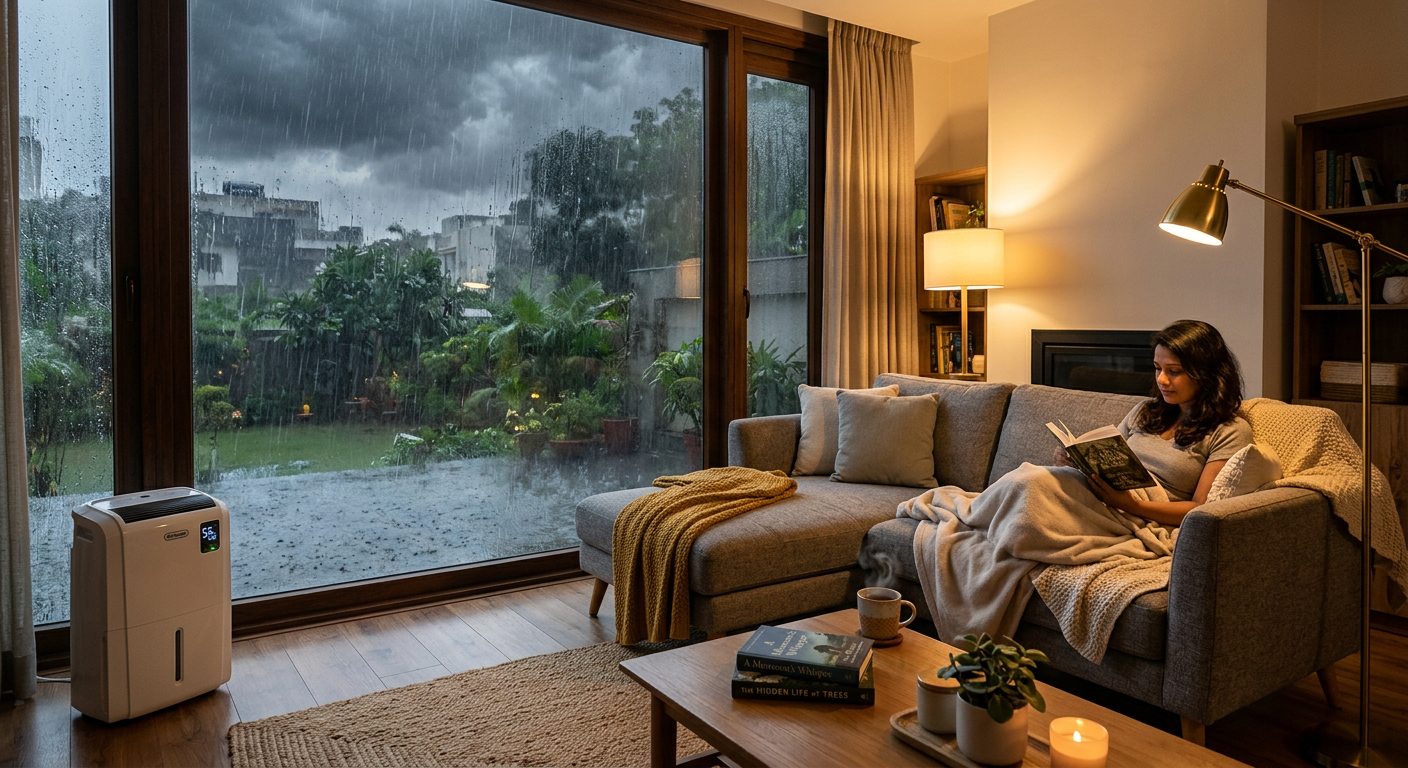
During the monsoon season, humidity levels in @Location can rise significantly, creating uncomfortable indoor conditions and increasing the risk of moisture-related problems. While rain brings relief from heat, the accompanying increase in moisture in the air can affect homes, offices, warehouses, commercial establishments, hospitals, hotels, and industrial facilities.
Excess humidity may result in damp walls, condensation on surfaces, musty odours, mould growth, wet floors, moisture accumulation, and deterioration of materials, equipment, furniture, documents, inventory, and other valuable assets. In environments where humidity needs to be maintained within a controlled range, relying only on air conditioning or ventilation may not always provide the desired level of moisture control.
This is where dehumidification becomes an important part of maintaining a dry, comfortable, and controlled indoor environment.
If you are looking for effective monsoon humidity control in @Location, selecting the right dehumidifier based on your space, application, humidity level, and moisture load can make a significant difference.
Why Does Humidity Increase During the Monsoon in @Location?
Monsoon weather brings high levels of moisture into the atmosphere. As warm, moisture-laden outdoor air enters buildings through doors, windows, ventilation openings, and other areas, indoor relative humidity can increase.
Even when rain stops, moisture can remain trapped in the surrounding environment. Poor ventilation, frequent movement between indoor and outdoor areas, wet clothing, damp surfaces, and moisture entering through walls or floors can further contribute to elevated indoor humidity.
In @Location, businesses and property owners may experience different humidity-related challenges depending on the building structure, local weather conditions, usage of the space, and the type of activities carried out inside.
Air conditioning can help reduce some moisture while cooling the air, but it may not always be sufficient when the primary requirement is precise or continuous humidity control. A dedicated dehumidifier is designed specifically to extract moisture from the air and can be used to maintain a more controlled indoor environment.
What Problems Can Excess Humidity Cause?
High humidity is more than just a comfort issue. Prolonged exposure to excessive moisture can affect buildings, products, equipment, and indoor environments.
1. Damp Walls and Surfaces
One of the most common signs of excessive humidity is dampness. Walls, ceilings, floors, and other surfaces can retain moisture, particularly in poorly ventilated areas.
Persistent dampness can contribute to staining, peeling paint, deterioration of finishes, and other moisture-related problems. Maintaining suitable humidity levels can help create a drier indoor environment and reduce the impact of excess moisture.
2. Condensation
When humid air comes into contact with cooler surfaces, condensation can occur. You may notice water droplets on windows, metal surfaces, pipes, equipment, or other cool areas.
In commercial and industrial environments, condensation can become particularly problematic because moisture may come into contact with sensitive equipment, electrical components, packaging, stored materials, or finished products.
Effective dehumidification can help reduce the amount of moisture available in the air, helping to minimise condensation under suitable operating conditions.
3. Musty Odours
A persistent musty smell is often associated with damp or poorly ventilated spaces. During the monsoon, enclosed rooms, storage areas, basements, warehouses, and other spaces may develop unpleasant odours when moisture levels remain high.
Reducing excess humidity can contribute to a fresher and more comfortable indoor environment.
4. Mould and Fungal Growth
Moist environments can encourage mould and fungal growth, especially
Need help controlling humidity in @Location this monsoon? Contact JET INDIA today to find the right dehumidification solution for your requirement.