
Server rooms and data centres are the backbone of modern businesses. They house critical IT infrastructure, including servers, networking devices, storage systems, UPS units and other sensitive electronic equipment. These systems operate continuously and generate heat, making temperature and humidity control essential for maintaining a stable operating environment.
While most businesses focus on cooling their server rooms, humidity control is equally important. Excess moisture in the air can create several risks for electronic equipment, potentially affecting performance, reliability and equipment lifespan. This is why installing an appropriate dehumidification system is an important consideration for modern server rooms and data centres at @location.
1. Prevents Condensation on Sensitive Equipment
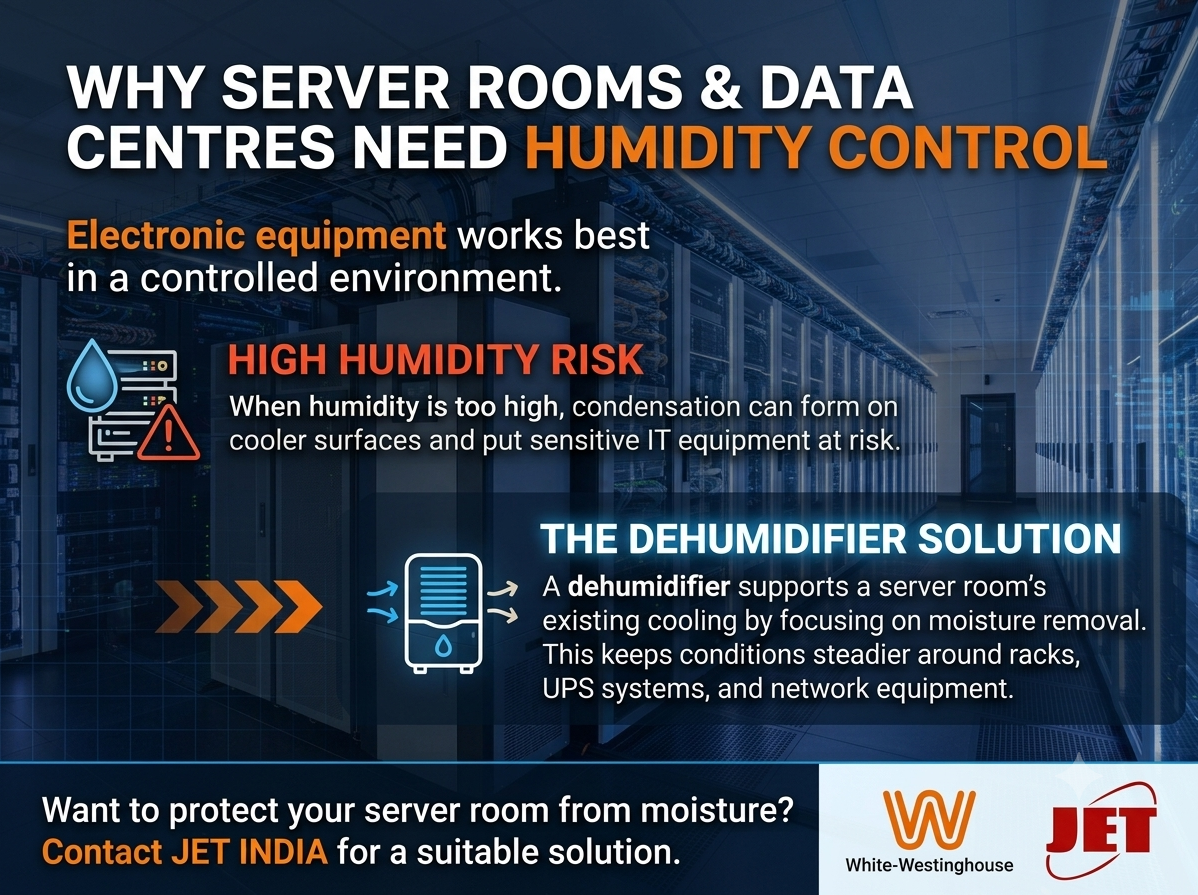
One of the biggest concerns associated with high humidity is condensation. When warm, moisture-filled air comes into contact with cooler surfaces, water droplets can form. In a server room, these surfaces may include metal cabinets, equipment enclosures, cooling components and other electronic parts.
Condensation can increase the risk of electrical faults, corrosion and damage to sensitive components. Maintaining appropriate humidity levels helps reduce the possibility of moisture accumulation and supports a safer environment for critical IT infrastructure at @location.
2. Protects Servers and Electronic Components
Servers, switches, routers and storage devices contain delicate electronic circuits that require stable environmental conditions. Excessive moisture can contribute to corrosion of connectors, circuit boards and metallic components over time.
Although modern IT equipment is designed to operate under specified environmental conditions, consistently high humidity can increase the risk of equipment-related problems. A properly selected dehumidifier helps remove excess moisture from the air, supporting a more controlled environment for valuable electronic assets.
Businesses operating server rooms at @location can benefit from effective humidity management to protect their critical equipment.
3. Supports Reliable Data Centre Operations
Data centres operate around the clock, and even a minor equipment issue can affect business operations. Unexpected downtime may disrupt communication networks, cloud services, data storage and other essential business functions.
Humidity fluctuations can add another layer of environmental risk. By maintaining more consistent moisture levels, dehumidification helps create suitable operating conditions for servers and networking equipment.
A controlled environment supports operational reliability and helps businesses reduce the risks associated with excessive indoor moisture at @location.
4. Complements Existing Air Conditioning Systems
Air conditioning systems play an important role in maintaining the required temperature inside server rooms. However, temperature control and humidity control are two different functions.
An air conditioning system may remove some moisture while cooling the air, but it may not always provide sufficient dehumidification, particularly in areas with high outdoor humidity or changing moisture loads.
A dedicated dehumidifier focuses on removing excess moisture from the air. When properly selected and integrated with the existing HVAC system, it can complement cooling equipment and help maintain more stable environmental conditions for data centres at @location.
5. Reduces the Risk of Corrosion and Moisture-Related Damage
High humidity can accelerate corrosion, especially when moisture combines with airborne contaminants. Over time, this can affect metal surfaces, electrical connections and equipment components.
Preventing excessive moisture helps minimise these environmental risks and supports better protection of expensive IT infrastructure. For facilities containing large numbers of servers, even small improvements in environmental control can be valuable.
6. Helps Maintain a Suitable Environment Around Critical Equipment
Every server room has specific environmental requirements depending on its equipment, room layout, cooling capacity and operating conditions.
Factors such as room size, equipment heat generation, air circulation and external humidity should be considered when selecting a dehumidification solution.
A properly designed system helps maintain consistent humidity levels across different areas of the facility, including server racks, UPS systems and networking equipment. Businesses looking for reliable humidity control at @location should consider solutions suited to their specific facility requirements.
Choose the Right Dehumidification Solution with JET INDIA
Humidity management is an important part of protecting modern IT infrastructure. While cooling systems manage heat, dehumidifiers address excess moisture that can create unwanted risks for sensitive electronic equipment.
At JET INDIA, we understand the importance of maintaining controlled indoor environments for critical applications. We offer dehumidification solutions designed to support moisture control requirements across different industrial and commercial environments.
Whether you operate a small server room or a large data centre, choosing the right dehumidification system can help protect valuable equipment and support reliable operations.
Looking to protect your server room or data centre from excess moisture? Contact JET INDIA today to explore a suitable dehumidification solution at @location.