
Different spaces have different humidity-control requirements. A small room, office, residential property, warehouse, manufacturing facility, or large industrial plant may require a different type and capacity of dehumidifier. Choosing the right dehumidification system is essential for maintaining the desired humidity level, protecting equipment and materials, improving storage conditions, and supporting efficient operations.
Excess moisture in the air can create several challenges, including condensation, mold and mildew growth, corrosion, unpleasant odors, material deterioration, and damage to sensitive products or equipment. In industrial environments, uncontrolled humidity can also affect manufacturing processes, product quality, storage conditions, and overall operational efficiency.
At JET INDIA, we offer dehumidification solutions for a wide range of applications. From compact portable dehumidifiers for homes, offices, and smaller rooms to high-capacity industrial dehumidifiers for demanding commercial and industrial environments, the right equipment depends on the specific requirements of each application.
Portable Dehumidifiers for Smaller Spaces
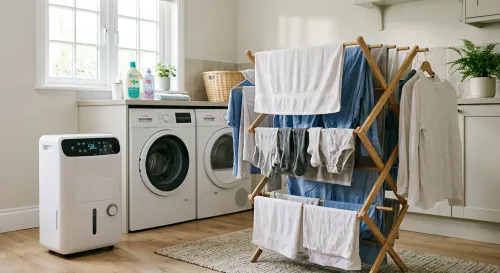
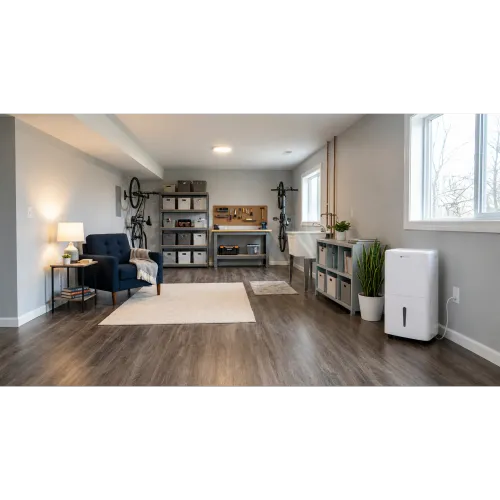
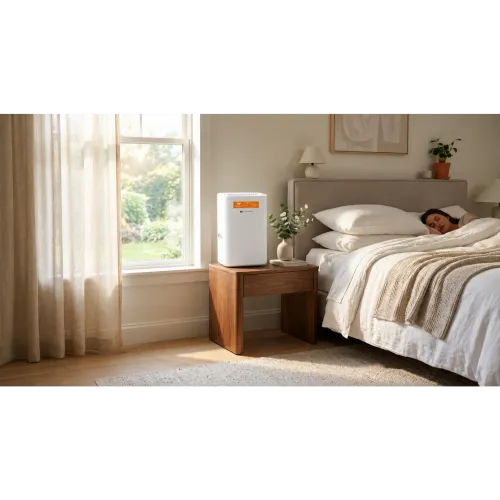
Portable dehumidifiers are suitable for applications where flexible and convenient moisture control is required. They can be used in homes, offices, bedrooms, basements, storage rooms, small commercial spaces, and other areas where excess humidity needs to be reduced.
A portable dehumidifier helps remove excess moisture from the air and can support a more comfortable indoor environment. Its compact and movable design makes it suitable for applications where the equipment may need to be relocated between different rooms or areas.
@location
The required portable dehumidifier capacity depends on several factors, including room size, moisture generation, ventilation, temperature, existing humidity levels, and the desired relative humidity.
Industrial Dehumidifiers for Large Areas
Large commercial and industrial facilities often require considerably more dehumidification capacity than portable units can provide. Industrial dehumidifiers are designed for applications that require higher moisture-removal capacity, greater airflow, continuous operation, and reliable humidity control.
Industrial dehumidification systems can be used in warehouses, manufacturing plants, pharmaceutical facilities, food-processing units, cold storage facilities, textile industries, electronics manufacturing, laboratories, archives, and other specialized environments.
@location
Industrial applications can have significant moisture loads due to production processes, ventilation, open doors, wet materials, personnel, and outside air infiltration. A correctly selected industrial dehumidifier can help maintain the required environmental conditions while supporting process and storage requirements.
How to Select the Right Dehumidifier
Selecting a dehumidifier should involve more than simply considering the size of the room or facility. Several factors influence the required dehumidifier capacity.
Important factors include:
Area and volume of the space
Existing humidity level
Desired relative humidity
Operating temperature
Moisture generated by production processes
Outside air infiltration
Ventilation requirements
Number of people occupying the space
Frequency of door openings
Type of products or materials being stored
Required operating hours
Installation conditions
Understanding these factors can help determine whether a portable dehumidifier, commercial dehumidifier, or industrial dehumidification system is suitable for the application.
@location
For spaces with significant moisture generation or strict humidity requirements, selecting equipment based on the actual moisture load rather than room size alone can be particularly important.
Industrial Dehumidification Applications
Dehumidification systems are used across numerous industries where controlling moisture is essential. Common applications include warehouses, production facilities, pharmaceutical plants, food-processing facilities, cold storage areas, textile units, electronics manufacturing facilities, laboratories, museums, archives, server rooms, and commercial buildings.
In manufacturing environments, excess humidity can affect raw materials, finished products, machinery, packaging, and production processes. In storage applications, moisture control can help maintain suitable conditions for products that are sensitive to humidity.
@location
Electronics, pharmaceutical, textile, food, and manufacturing applications may require precise humidity management. The appropriate system should therefore be selected according to the specific process and environmental requirements rather than using the same solution for every application.
Humidity Control for Warehouses and Storage
Warehouses can be particularly vulnerable to moisture-related problems. Changes in outdoor conditions, frequent loading and unloading, open entrances, and inadequate ventilation can introduce significant amounts of moisture into a facility.
Excess humidity may contribute to condensation, corrosion, packaging damage, mold growth, and deterioration of stored materials. A suitable warehouse dehumidifier can help maintain controlled environmental conditions and protect moisture-sensitive products.
@location
The required dehumidification capacity for a warehouse depends on factors such as building size, ceiling height, insulation, outdoor air infiltration, product conditions, temperature, and the desired relative humidity.
Dehumidification for Manufacturing Facilities
Manufacturing processes can generate considerable amounts of moisture. Depending on the industry, humidity can affect production quality, equipment performance, raw materials, packaging, and finished products.
An appropriately selected industrial humidity control system can help maintain consistent environmental conditions and reduce the impact of excessive moisture.
Industrial dehumidifiers may be suitable for continuous operation where humidity needs to be controlled throughout the production or storage environment.
@location
When selecting an industrial dehumidification system, it is important to consider both normal and peak operating conditions. Understanding the maximum expected moisture load can help ensure that the selected system provides sufficient capacity for the application.
Temperature and Humidity Requirements
Temperature is another important factor when selecting dehumidification equipment. Dehumidifier performance can vary depending on operating temperature and environmental conditions.
Cold rooms, warehouses, manufacturing areas, laboratories, and other controlled environments may have different requirements. Some applications may require specialized equipment capable of operating effectively under particular temperature conditions.
The required relative humidity should also be clearly defined. Different applications may require different humidity levels depending on the products, materials, processes, and equipment involved.
@location
A detailed evaluation of the application can help identify the appropriate dehumidifier capacity, operating configuration, and humidity-control approach.
Portable vs. Industrial Dehumidifiers
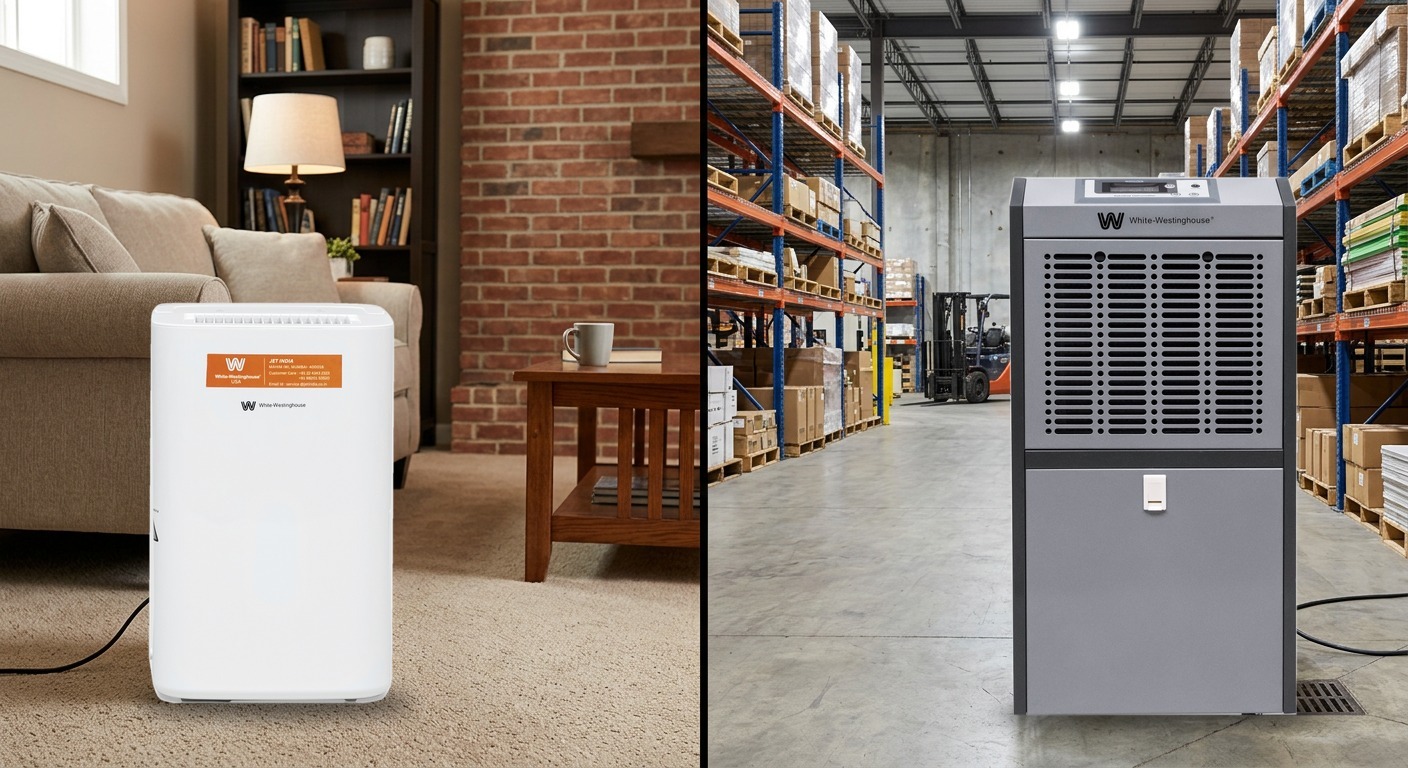
Portable and industrial dehumidifiers serve different purposes.
Portable units are generally suitable for smaller spaces where flexibility, mobility, and simple installation are important. They can be useful for rooms, offices, residential areas, and smaller commercial applications.
Industrial units are designed for larger areas and applications where higher moisture-removal capacity, continuous operation, higher airflow, and more demanding environmental conditions need to be considered.
@location
The choice between a portable and industrial dehumidifier should therefore be based on the actual application requirements rather than simply the physical size of the equipment.
Benefits of Proper Humidity Control
Effective humidity control can provide several benefits for commercial and industrial environments. Depending on the application, a suitable dehumidification system can help:
Reduce excess moisture in the air
Minimize condensation
Support protection against mold and mildew
Reduce moisture-related corrosion
Protect humidity-sensitive materials
Improve storage conditions
Support manufacturing processes
Maintain consistent environmental conditions
Protect equipment and machinery
Improve indoor comfort
The exact benefits depend on the application, operating conditions, and humidity-control requirements.
Choose the Right Dehumidification Solution
Every space has different humidity-control needs. A small office may require a compact portable dehumidifier, while a warehouse or manufacturing plant may need a high-capacity industrial dehumidification system.
Choosing the right solution requires an understanding of the area, moisture load, temperature, airflow, operating conditions, and required relative humidity. Proper equipment selection can help ensure effective moisture removal while avoiding unnecessary energy consumption and operating costs.
@location
Whether you need a portable dehumidifier, commercial dehumidifier, industrial dehumidifier, warehouse dehumidifier, or customized humidity control system, JET INDIA can help you identify a suitable solution based on your application requirements.
If you are experiencing condensation, excessive moisture, dampness, mold concerns, corrosion, or humidity-related product and process issues, the right dehumidification equipment can make a significant difference.
Not sure which type of dehumidifier you need? Contact JET INDIA to discuss your application, moisture load, operating conditions, and humidity-control requirements.