
Drying clothes indoors is a practical solution when outdoor drying is not possible due to rain, high humidity, limited space, apartment living, or unfavorable weather conditions. However, while indoor clothes drying is convenient, it can introduce a significant amount of moisture into the surrounding air. When this moisture does not have an effective way to escape, indoor humidity levels can rise and create a damp environment.
Excess moisture in enclosed spaces can affect both the comfort of occupants and the overall indoor environment. Rooms with poor ventilation may take longer to dry, and clothes can remain damp for extended periods. This is where a suitable dehumidifier can provide an effective moisture-control solution.
Why Does Indoor Clothes Drying Increase Humidity?
Wet clothes contain a considerable amount of water. As clothes dry, this water gradually evaporates into the surrounding air. When drying takes place outdoors, the moisture is dispersed naturally. Indoors, however, the moisture remains within the room unless it is removed through ventilation, air conditioning, or dehumidification.
In a small or enclosed drying area, the moisture released from wet clothes can quickly increase relative humidity. If windows cannot be opened or ventilation is insufficient, the air may become noticeably humid and uncomfortable.
High indoor humidity can also slow down the drying process. Once the surrounding air becomes saturated with moisture, it becomes less capable of absorbing additional water from wet fabrics. As a result, clothes may take considerably longer to dry.
How a Dehumidifier Supports Indoor Clothes Drying
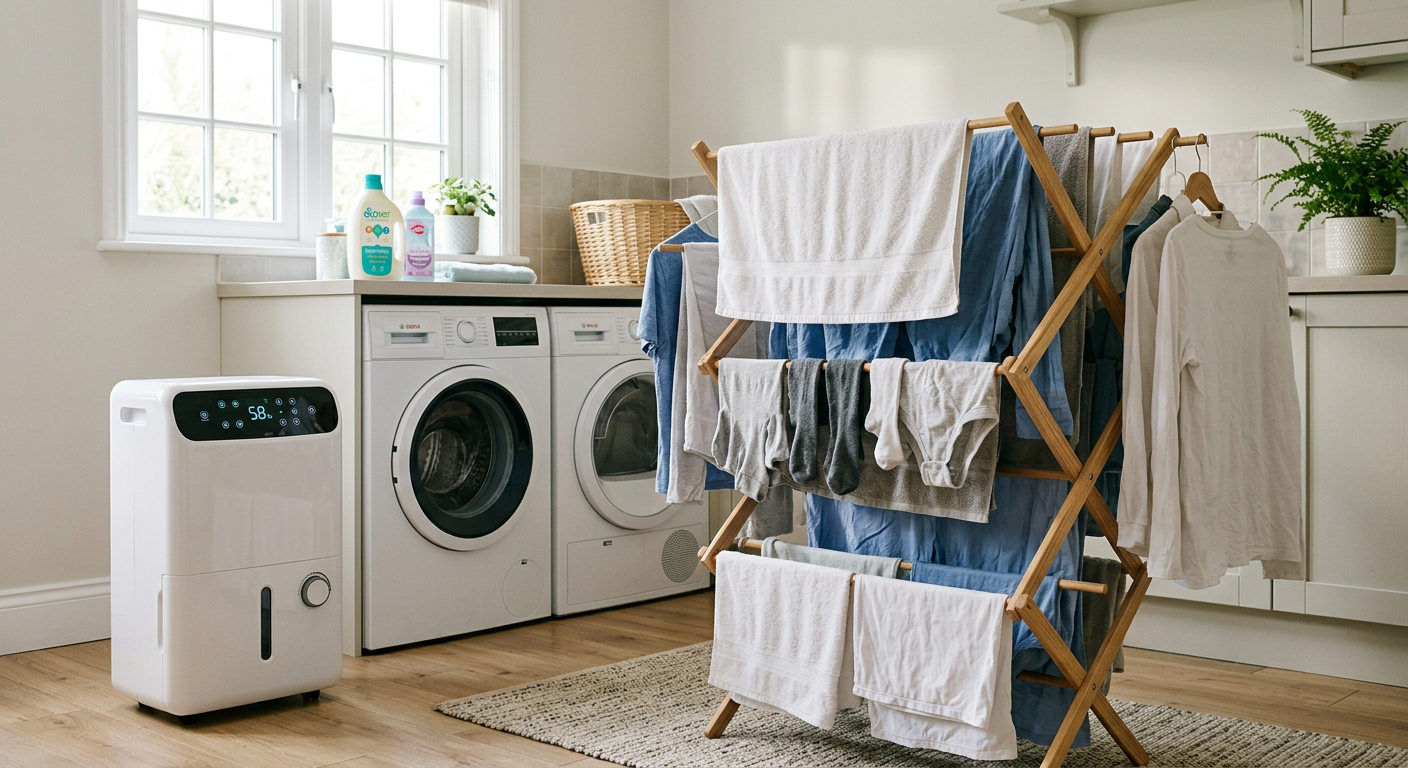
A dehumidifier is designed to remove excess moisture from the air. When placed in a suitable enclosed drying area, it can help reduce the humidity created by evaporating water from wet clothes.
The basic process is straightforward. Moist air is drawn into the dehumidifier, where moisture is removed before the drier air is returned to the room. As the humidity level decreases, the surrounding air can absorb more moisture from the clothes, supporting a more efficient drying process.
Using a dehumidifier in the right space can therefore create better conditions for indoor laundry drying. Instead of allowing moisture to accumulate in the room, the dehumidifier continuously works to manage the moisture released during the drying cycle.
Benefits of Using a Dehumidifier for Indoor Laundry
One of the key benefits of using a dehumidifier for clothes drying is improved moisture management. By controlling excess humidity, a dehumidifier can help create a more balanced indoor environment.
It can also support faster and more consistent drying by maintaining conditions that encourage moisture to evaporate from fabrics. This can be particularly useful during monsoon seasons, rainy weather, or in homes and facilities where outdoor drying is not practical.
Another advantage is that a dedicated drying area can be easier to manage when moisture is actively removed from the air. Instead of allowing humidity to spread throughout the property, the drying process can be concentrated in a suitable enclosed space.
A dehumidifier may also be useful for laundry rooms, utility rooms, drying chambers, commercial laundry areas, residential buildings, hostels, hotels, and other applications where clothes or fabrics need to be dried indoors.
Choosing the Right Dehumidifier for Clothes Drying
The right dehumidifier depends on several factors, including the size of the drying area, the quantity of clothes being dried, the amount of moisture released, operating conditions, and the desired drying time.
For larger spaces or applications involving frequent laundry drying, a higher-capacity dehumidification system may be required. Smaller enclosed spaces may require a different capacity and configuration.
It is also important to consider the operating environment. Factors such as temperature, airflow, room layout, humidity levels, and the number of drying cycles can influence dehumidifier performance.
A professional assessment can help determine the appropriate type and capacity of dehumidification equipment for a specific application.
Why Proper Ventilation and Dehumidification Matter
Ventilation and dehumidification can play different but complementary roles in moisture management. Ventilation can introduce fresh air and help remove humid air, while a dehumidifier actively extracts moisture from the air.
In spaces where natural ventilation is limited, dehumidification can be particularly useful. An enclosed drying area equipped with an appropriately selected dehumidifier can provide greater control over indoor humidity than simply leaving wet clothes in a closed room.
Proper airflow within the drying area is also important. Air should be able to circulate the clothes so that moisture can move away from the fabric and reach the dehumidifier effectively.
Indoor Moisture Control for Residential and Commercial Applications
Indoor clothes drying is not limited to homes. Many commercial and institutional environments may also need controlled drying solutions.
Hotels, laundries, hostels, hospitals, garment facilities, textile operations, and other businesses may handle significant quantities of wet fabrics. In such environments, managing humidity can become an important part of the overall drying process.
A properly designed dehumidification solution can help businesses manage moisture generated during laundry and fabric-drying operations while creating a more controlled environment.
For residential users, a dehumidifier can be considered for utility rooms, enclosed balconies, laundry rooms, or other designated indoor drying spaces.
Create a More Controlled Indoor Drying Environment
Simply placing wet clothes in a room may not provide the ideal drying conditions, particularly when the room has limited ventilation. Moisture released from the fabrics can remain trapped in the air, increasing humidity and potentially affecting the surrounding environment.
A dedicated indoor drying area combined with suitable airflow and dehumidification can provide a more controlled approach. By removing moisture from the air, the dehumidifier helps maintain conditions that support the drying process.
The objective is not simply to remove humidity but to create an environment where moisture can continuously move away from the wet fabrics and be collected or discharged by the dehumidification system.
Explore Dehumidification Solutions from JET INDIA
If indoor clothes drying is contributing to excessive moisture in your home, facility, or commercial space, selecting the right dehumidification system can make a meaningful difference.
JET INDIA can help you explore suitable dehumidifier solutions based on your drying environment, space requirements, moisture load, and application. Whether you are looking for a solution for a residential laundry area or a larger commercial drying application, choosing equipment according to actual requirements is essential for effective moisture control.
Instead of allowing moisture from wet clothes to accumulate indoors, consider creating a dedicated and controlled drying environment with appropriate dehumidification.
For suitable indoor moisture-control and clothes-drying solutions, contact JET INDIA to discuss your requirements and explore the right dehumidifier for your application.