
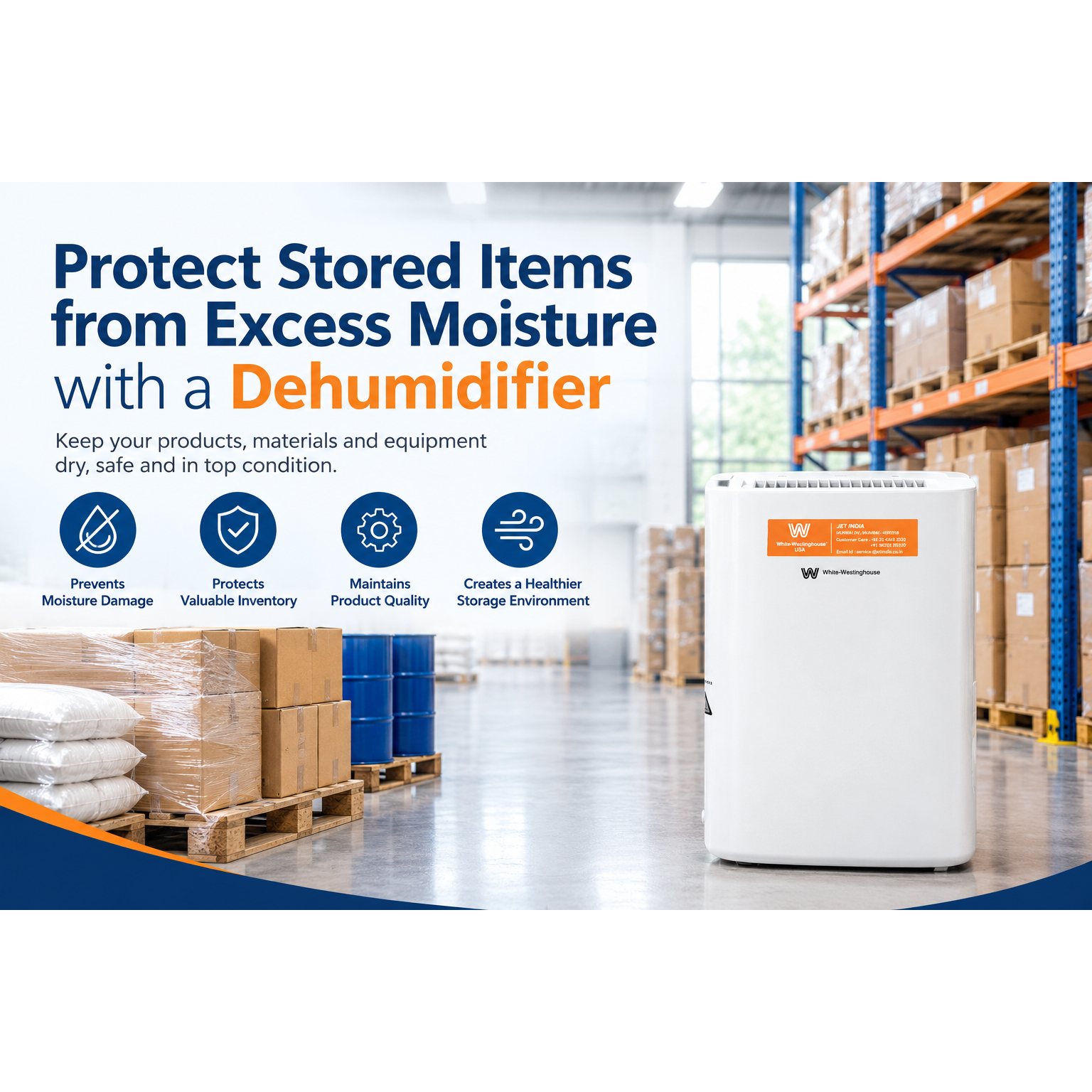
Storage areas play an important role in protecting valuable materials, products, equipment, packaging, and inventory. Whether you manage a warehouse, commercial storage facility, industrial unit, distribution centre, or business inventory room, maintaining suitable environmental conditions is essential for preserving stored items. One of the most common challenges in storage environments is excess humidity.
When moisture levels become too high, stored materials may be exposed to dampness, condensation, musty odours, and other moisture-related problems. These conditions can affect product quality, packaging integrity, equipment performance, and overall storage efficiency. Areas with limited ventilation, fluctuating temperatures, or frequent exposure to humid air can be particularly vulnerable.
JET INDIA offers dehumidification solutions designed to help businesses manage excess moisture and maintain more suitable storage conditions. With an appropriate dehumidifier, you can take a proactive approach to humidity control and help protect the items stored in your facility.
Why Is Humidity Control Important in Storage Areas?
Humidity refers to the amount of moisture present in the air. While some moisture is natural and necessary, excessive humidity can create challenges in enclosed storage spaces. Warehouses, stockrooms, industrial storage areas, and commercial facilities may experience elevated humidity because of weather conditions, moisture entering through doors, inadequate ventilation, or temperature variations.
When humid air comes into contact with cooler surfaces, condensation may occur. Over time, these conditions can contribute to moisture-related damage and create difficulties in maintaining appropriate storage conditions.
Effective humidity management helps businesses reduce exposure to excess moisture and maintain a more controlled storage environment.
Common Problems Caused by Excess Humidity in Storage Areas
1. Moisture Damage to Stored Materials
Paper products, cardboard, wooden items, textiles, and other moisture-sensitive materials can be affected by high humidity. Prolonged exposure to damp conditions may cause materials to soften, warp, swell, or deteriorate, depending on their composition and storage requirements.
Maintaining appropriate humidity levels can help reduce these risks and support better material preservation.
2. Packaging Deterioration
Packaging protects products during storage, transportation, and distribution. However, excessive moisture can weaken cardboard boxes, affect paper labels, damage cartons, and compromise certain packaging materials.
For businesses that handle large quantities of packaged goods, humidity control can help maintain packaging quality and support efficient inventory management.
3. Risk of Corrosion on Metal Equipment
Metal components, tools, machinery parts, and equipment stored in humid environments may be more susceptible to corrosion, particularly when condensation forms on their surfaces.
A suitable dehumidification system can help control airborne moisture and reduce conditions that encourage condensation. The effectiveness of humidity control depends on the equipment selected, the storage environment, and the required humidity level.
4. Unpleasant Musty Odours
Poorly ventilated storage rooms with persistent dampness may develop musty odours. These conditions can indicate a moisture problem that requires attention.
Dehumidification can help reduce excess moisture in the air. However, existing leaks, wet materials, and other sources of dampness should also be identified and corrected.
5. Potential Impact on Inventory Quality
Different products have different storage requirements. Electronics, textiles, paper goods, industrial components, packaging materials, and certain other products may require controlled humidity conditions to maintain their quality.
By assessing the moisture sensitivity of stored inventory, businesses can determine whether a dedicated dehumidifier is appropriate for their storage area.
How Can a Dehumidifier Help Protect Storage Areas?
A dehumidifier removes excess moisture from the air and helps maintain humidity within a suitable range. Depending on the model and application, it can be used in warehouses, stockrooms, storage facilities, industrial spaces, and other enclosed areas where humidity control is important.
Installing a suitable dehumidifier can provide several benefits:
- Better moisture management: Helps control excessive humidity in enclosed storage areas.
- Protection for stored materials: Supports suitable environmental conditions for moisture-sensitive inventory.
- Improved packaging preservation: Helps reduce exposure to damp conditions that may affect packaging.
- Reduced condensation risk: Helps manage indoor humidity when properly sized and operated.
- Support for inventory management: Helps businesses maintain more consistent storage conditions.
- Flexible application options: Different dehumidifier models can suit different room sizes, moisture loads, and operating requirements.
For effective performance, the equipment must be selected according to the storage area's dimensions, temperature, humidity levels, moisture sources, ventilation, and required operating conditions.
Which Storage Areas Can Benefit from Dehumidification?
Dehumidification can be useful across several commercial and industrial applications.
Warehouse Storage: Warehouses containing cartons, packaged products, textiles, paper goods, or moisture-sensitive inventory may benefit from controlled humidity.
Industrial Storage Rooms: Facilities storing metal components, tools, spare parts, electrical equipment, and machinery components can assess dehumidification to help manage moisture exposure.
Packaging and Paper Storage: Paper rolls, cardboard cartons, labels, and other paper-based materials may require carefully managed humidity conditions.
Textile and Garment Storage: Fabrics, garments, and textile products can be sensitive to prolonged exposure to unsuitable humidity levels.
Electronics and Component Storage: Certain electronic components and electrical products require specific environmental conditions. The dehumidifier must be selected according to the manufacturer's storage specifications.
Commercial Stockrooms: Retailers, distributors, and businesses holding inventory for extended periods can evaluate humidity control to help maintain suitable storage conditions.
Choosing the Right Dehumidifier for Your Storage Area
Selecting the right dehumidifier is essential for reliable humidity management. A unit that is too small may struggle to maintain the desired humidity, while an unsuitable model may not perform effectively under the site's temperature and moisture conditions.
Before choosing a system, consider the following factors:
- Storage area size: Measure the room's floor area and ceiling height to determine its volume.
- Existing humidity levels: Measure relative humidity to understand the current conditions.
- Type of stored materials: Identify whether your inventory is sensitive to moisture or condensation.
- Temperature conditions: Confirm that the selected equipment operates effectively at the site's expected temperatures.
- Moisture sources: Assess water ingress, wet goods, open doors, ventilation, and other potential sources of humidity.
- Required humidity range: Establish the appropriate target based on the products being stored.
- Operating requirements: Consider drainage, maintenance, operating hours, and energy consumption.
A professional assessment can help determine the suitable capacity and type of dehumidifier for your application.
Why Choose JET INDIA for Dehumidification Solutions?
JET INDIA understands the importance of managing humidity in storage and industrial environments. Choosing an appropriate dehumidification solution starts with understanding your specific requirements, the type of materials stored, and the environmental conditions within your facility.
Whether you need humidity control for a warehouse, industrial storage room, commercial stockroom, or another enclosed space, selecting the right equipment can help support better storage practices.
The goal is to provide a solution that matches your application, rather than choosing equipment based on room size alone.
Protect Your Stored Inventory with JET INDIA
Excess humidity can create avoidable challenges for businesses that depend on safe, organised, and reliable storage conditions. From packaging deterioration and damp materials to condensation concerns, moisture-related issues can affect inventory and day-to-day operations.
A suitable dehumidifier can help remove excess moisture from the air and support the humidity conditions required by your stored products.
If you are experiencing high humidity in your warehouse, stockroom, or industrial storage area, contact JET INDIA to discuss your requirements and identify a suitable dehumidification solution.