

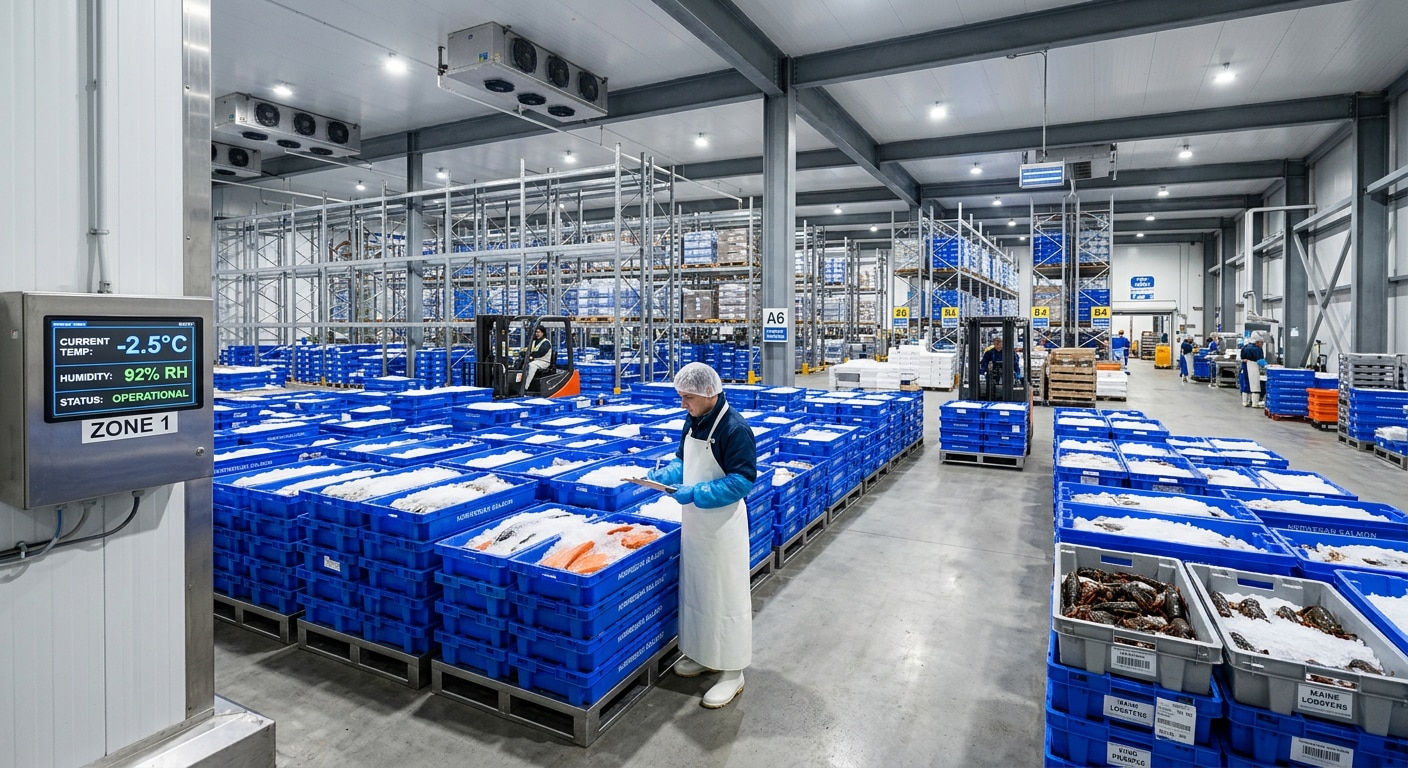
India is among the world's leading seafood exporters, supplying frozen shrimp, fish, squid, crab, and other marine products to customers across Europe, the United States, Japan, and the Middle East. While maintaining the cold chain is a top priority, there's another factor that plays an equally important role in preserving seafood quality—humidity control.
Many exporters focus entirely on temperature, assuming that refrigeration alone is enough. In reality, excess moisture in processing and storage areas can quietly damage products, weaken packaging, increase energy costs, and even lead to rejected export shipments.
Let's take a closer look at why controlling humidity is just as important as controlling temperature in the seafood export industry.
The Hidden Challenge of Moisture in Seafood Storage
Seafood processing facilities naturally generate a lot of moisture. Frequent washing, ice handling, blast freezing, chilled storage, and the movement of products between warm and cold areas all add humidity to the air.
When this moisture isn't properly managed, it begins to condense on walls, ceilings, floors, packaging, and even the seafood itself.
Although it may seem harmless at first, excess humidity can create several costly problems, including:
Frost and ice build-up on evaporator coils, reducing cooling efficiency and increasing electricity consumption.
Freezer burn and surface dehydration that affect the texture, colour, and weight of frozen seafood.
Soft or damaged cartons that lose strength during storage and transportation.
Mould and bacterial growth in processing areas, packing rooms, and storage facilities.
Wet, slippery floors that create safety hazards for employees.
Any one of these issues can compromise product quality, delay shipments, or even result in rejected consignments. For seafood exporters operating on tight schedules and strict international standards, the financial impact can be significant.
Why Refrigeration Alone Doesn't Solve the Problem
It's a common misconception that cold rooms automatically control humidity.
While refrigeration lowers the temperature, it doesn't remove all the moisture from the air. In fact, every time a freezer or cold storage door opens, warm, humid air enters the room. As that air cools, moisture condenses on equipment, walls, ceilings, and stored products.
This constant cycle of condensation is one of the biggest causes of frost formation and packaging damage.
An industrial dehumidifier works differently. Instead of simply cooling the air, it actively removes excess moisture, helping maintain stable relative humidity regardless of seasonal weather or frequent door openings.
For seafood processing plants located in India's coastal regions, where humidity remains high throughout the year, this level of control is essential.
Where Humidity Control Makes the Biggest Difference
Processing and Packing Areas
This is where seafood is cleaned, graded, weighed, glazed, and packed before freezing.
High humidity during these stages can lead to condensation on exposed products, damp labels, and weakened cartons. Maintaining controlled humidity helps keep the entire packing process cleaner, more efficient, and compliant with food safety standards.
Cold Stores and Blast Freezers
Cold storage facilities are especially vulnerable to ice accumulation.
By reducing airborne moisture, industrial dehumidifiers minimise frost build-up on evaporator coils, racks, and freezer surfaces. This improves cooling efficiency, reduces defrost cycles, lowers maintenance costs, and extends equipment life.
Dispatch and Dry Storage Areas
Even after packaging, seafood products remain vulnerable.
Cartons waiting for export should stay dry and structurally strong. Humidity-controlled dispatch areas prevent packaging from absorbing moisture before loading into refrigerated containers.
Loading Docks and Transition Areas
Loading docks, corridors, and ante-rooms experience constant temperature fluctuations as products move between refrigerated and ambient environments.
These areas are particularly prone to condensation. Proper humidity control protects both the building infrastructure and the products moving through these spaces.
Choosing the Right Dehumidifier
Every seafood facility has different humidity requirements depending on its size, layout, and daily production volume.
At Dehumidifiers India, we offer a complete range of White Westinghouse commercial and industrial dehumidifiers designed to support seafood processing, cold storage, and export facilities across India.
Whether you need a compact solution for a quality control room or a high-capacity system for a large processing plant, we can help you select the right model.
High-Capacity Models for Processing Plants and Cold Storage
Medium-Capacity Units for Packing and Dispatch Areas
Compact Units for Laboratories, QC Rooms, and Ante-Rooms
Supporting Compliance with International Export Standards
Today's international seafood buyers expect more than just quality products—they expect proof that those products have been processed and stored under controlled conditions.
Environmental monitoring is now an important part of food safety systems such as HACCP and is frequently reviewed during customer audits and export inspections.
Facilities that maintain consistent humidity levels are better equipped to:
Meet international food safety requirements
Pass customer and regulatory audits
Reduce the risk of product rejection
Protect long-term buyer relationships
Strengthen their reputation in global markets
Humidity control has become an essential part of modern seafood processing rather than an optional upgrade.
Final Thoughts
For seafood exporters, protecting product quality goes beyond refrigeration. Excess humidity can damage packaging, reduce shelf life, increase energy consumption, encourage microbial growth, and ultimately affect customer confidence.
Investing in proper humidity control helps prevent these problems before they occur.
With the right industrial dehumidification system, seafood processors can reduce operational costs, improve product quality, extend equipment life, and consistently meet the demanding standards of international export markets.
In an industry where freshness, quality, and reliability determine success, humidity control is one investment that continues to deliver value long after installation.
📍 If you want to talk to us you can call us at 08048038959 Please keep 0 before dialling the number.
Send us an email at ✉️ ram@jetindia.co.in. You can also visit our website at 🌐 dehumidifiersindia.com.
