

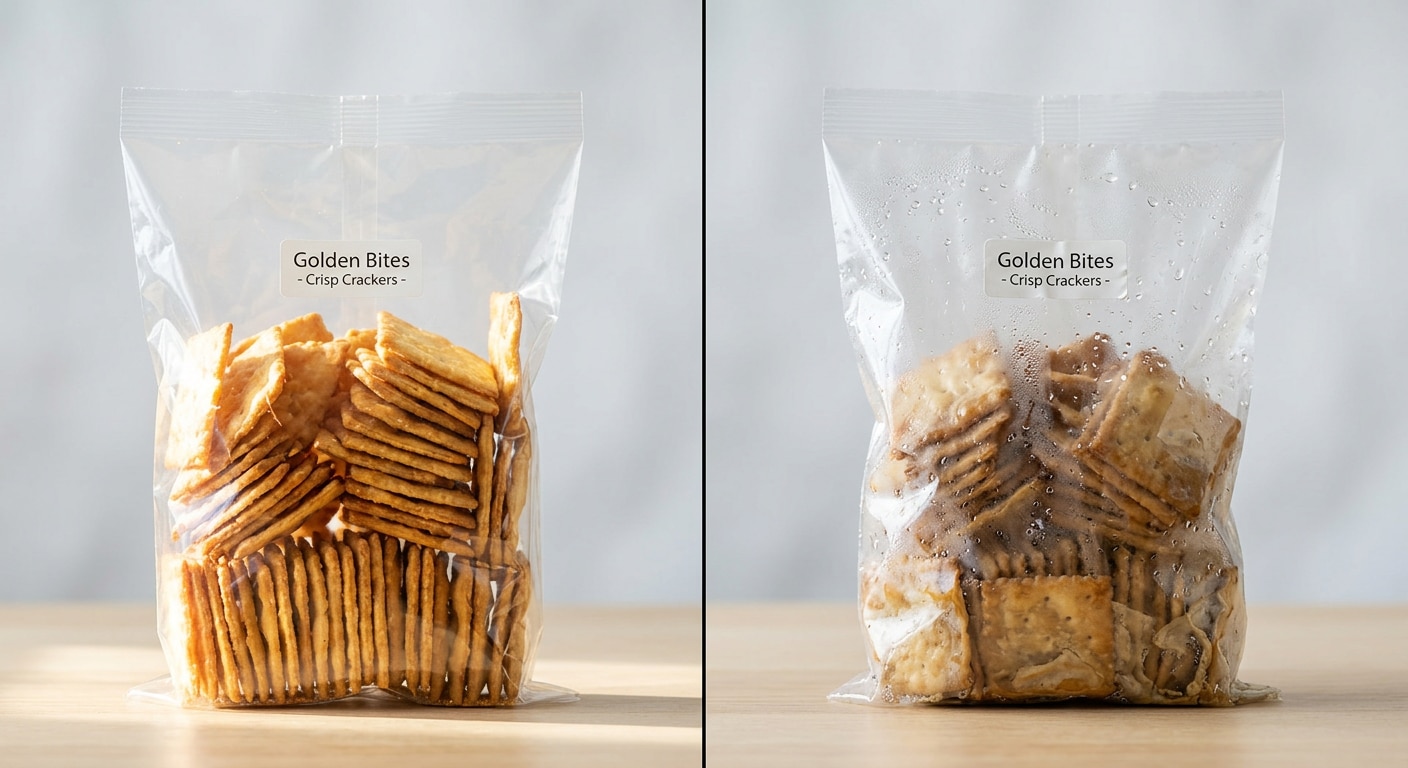
Walk through any food manufacturing plant, and you'll see rows of neatly packed chips, biscuits, milk powder, spices, cereals, and snacks ready to head to the market. While these products may look perfectly safe, they're constantly battling an invisible threat—moisture in the air.
Humidity is one of the biggest reasons packaged food loses its quality before its expiry date. It can make crispy snacks go soggy, turn powders into hard lumps, encourage mould growth, and even damage packaging. The good news? Most of these problems can be avoided with proper humidity control.
Let's explore why moisture is so damaging and how industrial dehumidification helps food manufacturers protect product quality and reduce losses.
Why Water Activity Matters More Than Moisture Content
When food experts evaluate how moisture affects food, they don't just look at how much water a product contains. They focus on water activity (aw)—a measurement of how much water is freely available inside the food to support chemical reactions and microbial growth.
Water activity ranges from 0 to 1, and it's directly influenced by the humidity of the surrounding air.
Imagine a packet of crispy biscuits stored in a humid room. Even though the biscuits are dry, they slowly absorb moisture from the air until they reach equilibrium. As a result, they lose their crunch, become stale, and their shelf life starts shrinking.
Likewise, foods with higher moisture can lose water if they're stored in very dry conditions.
For most dry and semi-dry food products, maintaining an ambient relative humidity between 40% and 55% provides the ideal balance for preserving quality.
How Moisture Changes the Physical Quality of Food
One of the first signs of excessive humidity is a noticeable change in the product itself.
Powdered products such as milk powder, spices, coffee, protein supplements, cocoa, and instant mixes are especially vulnerable. As they absorb moisture, the tiny particles begin sticking together, forming hard lumps. This not only affects appearance but also creates problems during packaging, dispensing, and customer use.
Crunchy foods face a different challenge.
Products like potato chips, crackers, breakfast cereals, wafers, and namkeen depend on their crisp texture. Even a small amount of absorbed moisture can make them soft and stale, making the product far less appealing.
Humidity can also affect packaging materials. Labels may peel off, cartons can warp, adhesives weaken, and condensation may develop on chilled products when warm, humid air comes into contact with cold surfaces.
The Chemical Damage Happens Even Before You See It
Not all moisture damage is visible.
High humidity speeds up several chemical reactions that gradually reduce food quality:
Fats and oils oxidize more quickly, causing unpleasant smells and rancid flavours in snacks, nuts, and dairy products.
Naturally occurring enzymes become active again in dried fruits, vegetables, and grains, affecting colour, taste, and nutritional value.
The Maillard reaction—the process responsible for unwanted browning—accelerates under certain moisture conditions, causing powders and dried foods to darken over time.
Sensitive vitamins, particularly Vitamin C and several B vitamins, degrade much faster in humid environments.
Even if a product still looks acceptable, these reactions can significantly reduce its quality before it reaches consumers.
Moisture Also Encourages Microbial Growth
Perhaps the biggest concern is food safety.
Bacteria, yeasts, and moulds all require available moisture to grow. As humidity increases, the surface of food becomes more suitable for microbial activity.
Among these, mould poses one of the greatest risks because some species produce mycotoxins—harmful substances that can threaten consumer health and lead to costly product recalls.
For food manufacturers operating in India, especially during monsoon months or in coastal regions where humidity remains consistently high, this is an ongoing challenge that cannot be ignored.
Why Good Packaging Isn't Enough
Many manufacturers invest in high-quality packaging and assume that's enough to keep moisture away.
Unfortunately, packaging alone cannot solve the problem.
Most moisture absorption actually happens before the product is sealed. During processing, cooling, weighing, filling, and packaging, food remains exposed to the surrounding air. If that environment is humid, the product may already have absorbed enough moisture to reduce its shelf life before it even enters the package.
Over longer storage periods, moisture can also slowly pass through packaging materials or enter through tiny imperfections around seals.
Temperature changes can create another issue. Packing warm products in a cool, humid environment may lead to condensation forming inside the package itself.
That's why humidity control throughout production, packaging, and storage is just as important as selecting the right packaging material.
The Best Solution: Industrial Dehumidification
The most reliable way to prevent moisture-related damage is to control the humidity of the entire facility.
Industrial dehumidifiers continuously remove excess moisture from the air, maintaining stable humidity levels that protect products throughout manufacturing, packaging, and storage.
By keeping humidity under control, manufacturers can:
Preserve texture and freshness
Prevent powders from caking
Reduce mould growth
Minimise product wastage
Extend shelf life
Improve packaging performance
Reduce the risk of recalls
Protect brand reputation
White Westinghouse Dehumidifiers for Food Manufacturing
At Dehumidifiers India, we offer a complete range of White Westinghouse dehumidifiers designed to meet the humidity control needs of food processing facilities across India.
Whether you need a compact unit for a quality control laboratory or a powerful industrial solution for large production areas, there's a model to match your requirements.
For Small Rooms, Laboratories & QC Areas (12–40 L/day)
For Medium Packing & Processing Areas (60–100 L/day)
For Large Production Halls, Warehouses & Cold Storage (110–190 L/day)
Our team can also help you select the right capacity based on your facility size, operating conditions, and production requirements.
Final Thoughts
Moisture isn't just another environmental factor—it's one of the biggest threats to packaged food quality. From soggy snacks and clumped powders to mould contamination and shortened shelf life, excessive humidity quietly impacts every stage of food production.
The best way to stay ahead of these problems is by controlling humidity before damage occurs.
With the right industrial dehumidification solution, food manufacturers can maintain consistent product quality, reduce waste, improve operational efficiency, and protect their brand for the long term.
Talk to Our Team–
📞 Give us a call at 022 4343 2323
✅ Free consultation - provide us with the details of your cold storage, and we'll give you a recommendation for capacity and placement.
🎯 Free product demonstration - only available in Mumbai; see a dehumidifier in action at your facility before making a purchase decision.
)