

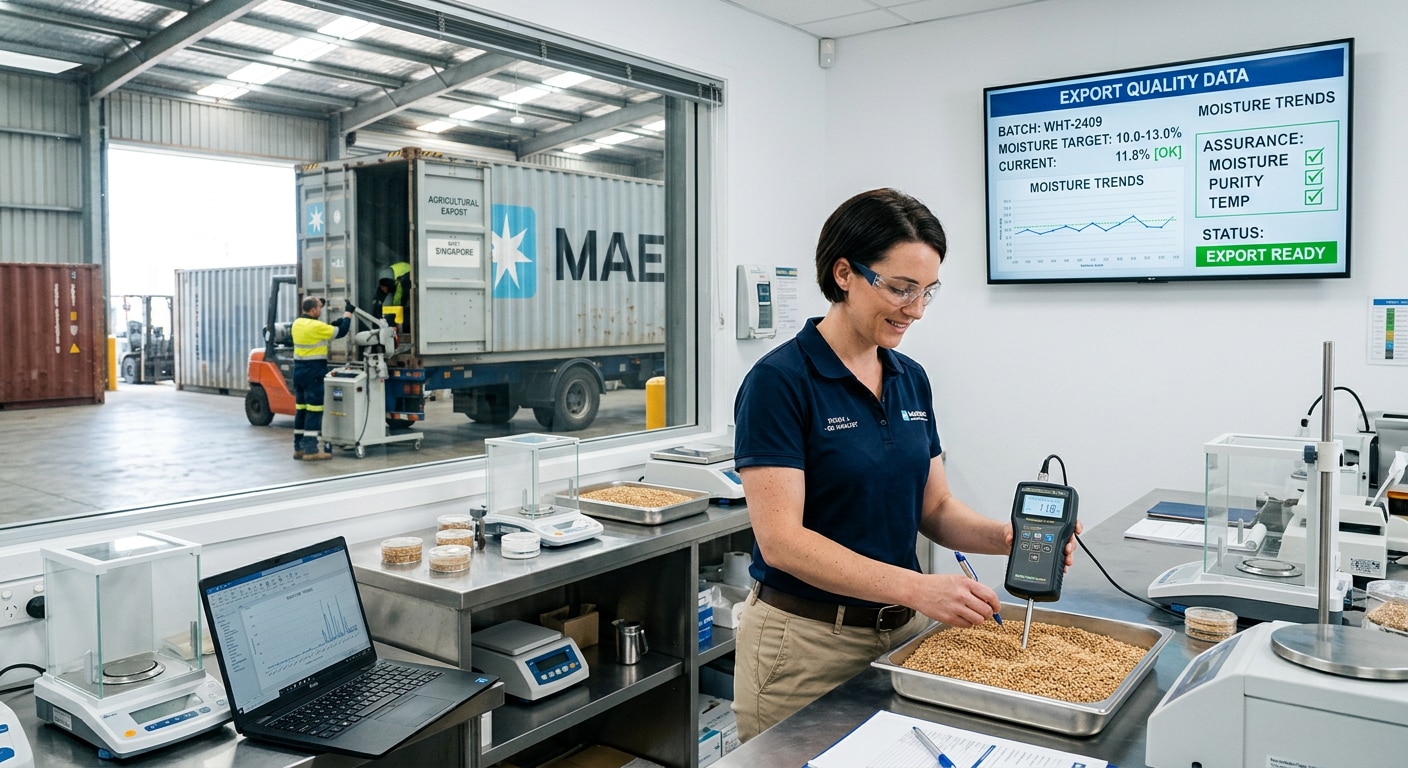
 Every exporter in India knows the feeling of dread that comes with a rejection email. The product passed your quality checks, went through the pre-shipment inspection, and left the factory in perfect condition. Six weeks later, the buyer opens the container in Rotterdam, Newark or Jebel Ali. Sends photos of cartons with mold, castings with rust spots, powder that has clumped, or garments with visible water marks. The claim follows. So does the pressure on the order.
In a number of these cases, the problem is not workmanship, raw material or packaging design. It is moisture. Moisture that was absorbed during production, trapped during packing or condensed inside the container during transport. Humidity is one process variable that most Indian export units never actually measure, and it quietly decides whether your product meets the standard your buyer agreed to.
Why Moisture Is a Compliance Issue, Not a Comfort Issue
International buyers do not simply ask for " good quality." They contract to standards. ISO 9001 process controls, FSSC 22000 and HACCP for food, WHO-GMP and Schedule M for pharmaceuticals, AATCC and ASTM test methods for textiles, RoHS and IPC handling norms for electronics, and buyer-specific rules from retailers like Walmart, Tesco, Zara, Decathlon or IKEA.
Read those standards carefully, and a common theme becomes clear: almost all of them specify conditions. ASTM D1776 requires textiles to be conditioned at 21°C and 65% relative humidity before testing. This means a fabric tested in a Tiruppur unit at 80% RH will show different weight, strength, and size results than the same fabric tested in your buyer's lab. Pharmaceutical granulation and tablet compression areas are usually kept below 40% RH. Food safety systems are built around water activity: most spoilage molds stop growing below an aw of 0.60 and mycotoxin-producing species need even less moisture to become a problem.
If you cannot show humidity control, you cannot show compliance. Increasingly, that is what auditors ask to see. A logged controlled RH value, not a promise.
Where Moisture Damages Export Consignments
Textiles and Garments
Cotton is hygroscopic. Moisture regain changes with RH, and with it goes weight, GSM, shrinkage behavior, and dye absorption. High humidity in finishing and packing areas causes yarn to swell, packed garments to develop a smell, and cartons to lose strength. Water-stained goods and mildew spots are among the common reasons for garment claims from Europe and North America.
Food, Spices, Tea, Nuts and Agro Commodities
Turmeric, chilli, cardamom, cashew, groundnut, tea. Dehydrated vegetables all reabsorb moisture from the air after drying. That reabsorption is what causes clumping, loss of oils, color fading. The serious issue. Mold growth and mycotoxin formation. EU limits on residues and contaminants are strict. A single rejected batch can lead to increased checks on your future shipments.
Pharmaceuticals and Nutraceuticals
Hygroscopic APIs and excipients take in moisture during weighing, granulation, and compression. The result is. Picking on punches, capping, inconsistent hardness, shorter shelf life, and out-of-specification dissolution rates. For markets, an uncontrolled environment is an observation waiting to happen.
Engineering Goods, Auto Components and Castings
Atmospheric corrosion increases rapidly once relative humidity goes beyond 60% around bare steel. Components sitting in a warehouse in Mumbai, Chennai or Kandla can develop rust within days ruining a finish that took hours of work to achieve. VCI paper and oil films help. They cannot fix a truly wet environment.
Leather, Furniture, Handicrafts and Wooden Packaging
Mold on leather goods and mildew on handicrafts is one of the most frequent categories of export claims from India. Wooden. Crates that are packed at high moisture content release that moisture inside a sealed container and become the source of contamination for everything around them.
Electronics and Electricals
Moisture-sensitive devices, PCBs, and packed assemblies require controlled storage per IPC/JEDEC standards. Absorbed moisture causes delamination during reflow, oxidation of contacts, and field failures that your buyer will trace back to you.
Container Rain: The Damage That Happens After You Ship
A 40-foot container loaded in an Indian port can contain several liters of water vapor in the air alone plus whatever is in the cargo, cartons, and wooden dunnage. As the ship moves through temperature changes, the steel roof cools below the dew point at night, and the vapor condenses and drips back onto the cargo. The problem shipping lines call "container rain" or "cargo sweat."
Desiccant bags help absorb what is already inside. The more effective solution is to reduce the moisture load before the container is sealed: dry the product, dry the packaging, dry the packing hall, and store the container in a controlled area. This is where industrial dehumidification pays for itself in an avoided claim.
Target Humidity Levels for Export-Grade Storage
As a guide for export units:
Pharmaceutical processing: 25–40% RH
Electronics assembly and storage: below 40% RH
Powders, spices, dry food packing: 40–50% RH
Metal components and machined parts: below 50% RH
Textiles, garments, leather, general FG warehouse: 50–55% RH
Container stuffing bays and packing halls: 45–55% RH
Air conditioning alone will not get you there. An air conditioner is designed to control temperature; dehumidification is a by-product, and in the monsoon it is not enough. A dedicated dehumidifier removes moisture continuously and separately from cooling. Which's why it is the standard solution in export facilities worldwide.
Choosing the Right Dehumidifier for Your Facility
We supply the White Westinghouse industrial dehumidifier range from small QC labs to full finished-goods warehouses. Selection depends on room size, ambient RH, air changes, and the moisture load from your product and process.
Small rooms: QC labs, sample rooms, server rooms, document archives
Medium areas: packing rooms, finishing sections, small cold-store anterooms
Production halls, FG stores and stuffing bays
warehouses, coastal godowns and high-load monsoon conditions
WDE-110P White Westinghouse Dehumidifier – 110 Litres/Day
WDE 110S White Westinghouse Dehumidifier – 110 Litres/Day
WDE150S White Westinghouse Dehumidifier – 150 Litres/Day
WDE-190S White Westinghouse Dehumidifier – 190 Litres/Day
For most export warehouses, we recommend starting with the higher-capacity WDE series. The WDE 100, WDE150S, or WDE-190S. Because the monsoon moisture load in Indian coastal cities is often underestimated. Undersizing is a common mistake we correct during on-site visits.
Building Humidity Control Into Your Quality System
Equipment is not a control. To make humidity auditable, do four things:
Measure and log. Install calibrated hygrometers or data loggers in each area and record readings on every shift.
Define limits. Write the target RH band into your SOPs and work instructions with a defined action if it is exceeded.
Control the envelope. Seal doors; use strip curtains or air curtains at dock openings. Stop humid outside air from entering a dry space.
Maintain the equipment. Clean filters, check drainage, and service coils on schedule so capacity does not quietly drop.
Together, these turn "we keep the godown dry" into documented evidence a buyer's auditor can sign off. That is often what converts a trial order into a long-term contract.
The Commercial Case
Think about a dehumidifier against what one rejection costs: the value of the goods return freight or destruction charges, air-freighted replacement, penalty for late delivery the cost of re-inspection, and the discount your buyer will demand on the next order. Most Indian export units find that a single avoided claim covers the equipment times over. Add rework, longer shelf life, fewer customer complaints, and cleaner audit reports, and moisture control stops looking like an overhead and starts looking like margin protection.
Talk to Us Before Your Next Shipment
We have been supplying White Westinghouse dehumidifiers to manufacturers, exporters, warehouses, and processing units for years, and we size every system to the actual moisture load. Not from a catalogue chart.
Protect your export consignment
Free consultation – Humidity load assessment for your plant or warehouse.
Call for inquiry – Pricing, capacity sizing and delivery timelines across India.
Free demo of the product available, in Mumbai only – See it working in your own facility.
Don't let humidity decide whether your consignment passes. Get in touch today. We will help you meet the standard your buyer is measuring you against.
