

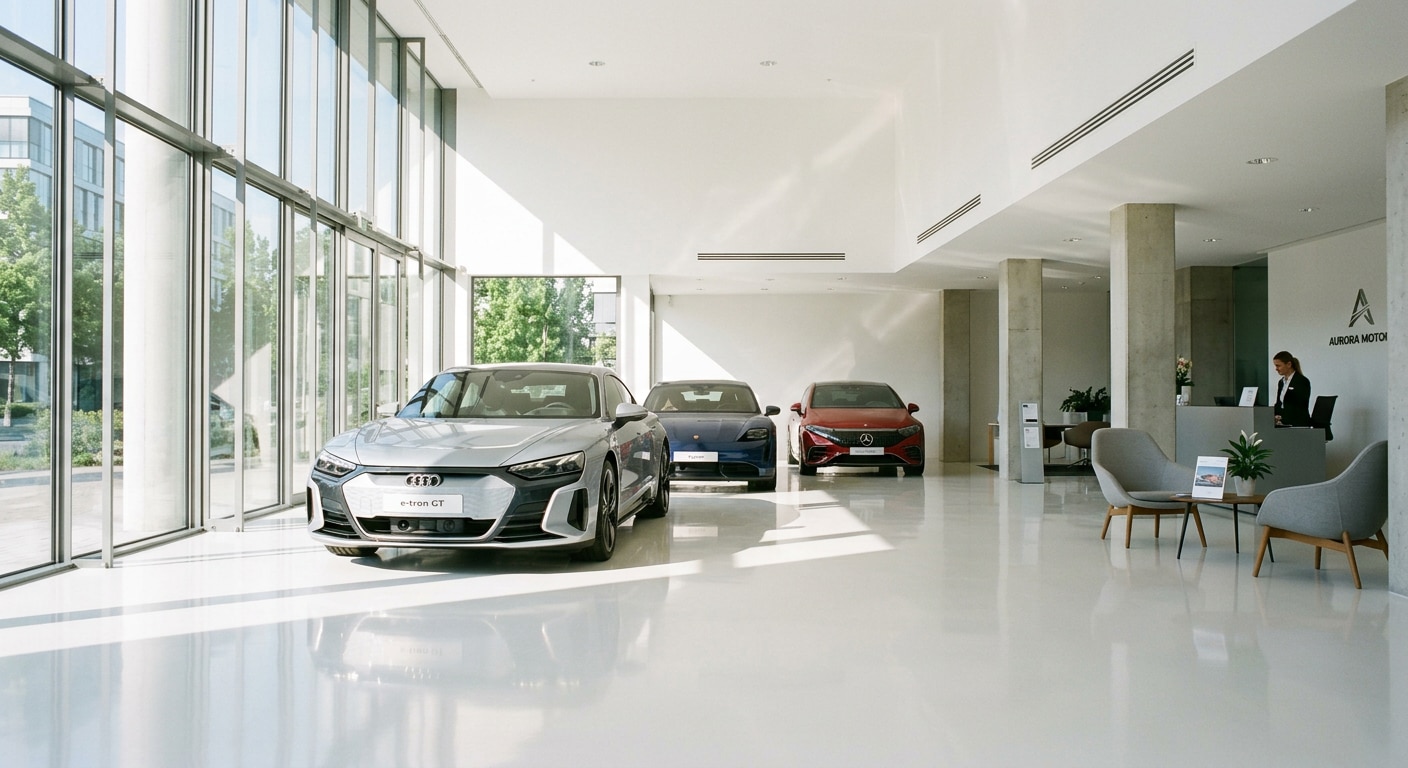
Walking into a showroom on a hot, sticky August afternoon in India, you know within the first five minutes there is going to be a complaint. The air in the building feels heavy. The glass on the display cases is perpetually cloudy, with a slight bloom you know is there even before you wipe it at 9 a.m. The film on the top shelf of the display cabinet was supposedly removed by the cleaning staff yesterday. The customer browsing the furniture is already fanning herself with the brochure and eyeing the exit.
Most showroom owners are inclined to hire an additional housekeeper or invest in an advanced glass-cleaning solution. However, recurring dust issues and the inability to keep the building at a comfortable temperature usually have one common cause - relative air humidity, which needs to be addressed mechanically.
Why humid air makes a showroom dustier
Dry dust behaves predictably - it lifts with the air and is easily captured in your AC vents or filters. However, humidity transforms it into something far more insistent. At a relative air humidity (RAH) of over 65%, airborne particles absorb moisture and transform into sticky globs that refuse to depart from delicate surfaces.
This is why your showroom looks immaculate at 8 a.m. but is already feeling heavy-handed at noon during the monsoon - while the same cleaning schedule keeps the place spotless throughout the December dry season. Moisture also adheres to chilled surfaces forming a virtually invisible film that traps floating dust like flypaper, with the amount of static electricity generated by carpets intensifying the effect.
Meanwhile, the moisture encourages the growth of mold on products with natural materials, tarnishes metals, and generally ages everything prematurely. Leather upholstery, for example, acquires a grey-greenish mildew bloom in places where it has been touched. Wooden furniture becomes warped, tile and sanitary ware display water etching, electronics suffer from corrosion, and textiles carry a damp smell customers will associate with low quality even if they can’t put their finger on why.
Comfort equals sales: How to calculate it properly
Ask any seasoned salesperson how long a customer browses your showroom, and they will tell you this directly correlates with the size of the purchase. If you want to boost sales, you need to give visitors a reason to stay longer. The most apparent signal that they are ready to leave is discomfort - but many showroom owners mistakenly try to solve it by simply lowering the temperature without considering the effects of humidity on the human body.
In reality, a RAH of over 75% produces similar discomfort to temperatures over 30 °C - even if the displayed temperature is 20 °C. Humidity interferes with the evaporation of sweat, making us feel much hotter than the thermometer suggests. Lowering the displayed temperature only fools us into thinking we need to put on a sweater while our overheated bodies demand the opposite.
Meanwhile, your air-conditioning system is working overtime trying to remove this hot, moist air from the showroom, driving up your electricity bills. By comparison, reducing the RAH to 45–55%, you achieve an excellent balance and lower your utility costs at the same time. At this level, 24–25 °C is a comfortable temperature to sit without a jacket, while your sales team members can stop looking like they have been sweating for the past hour.
Humidity also affects the perception of your space: a stuffy, moist atmosphere is one of the main red flags customers use to size up an entire business. You can’t overpower this impression with floral air fresheners - the only way to remove it is to dry your showroom properly.
How to choose a dehumidifier: capacity
Relative air humidity has a direct impact on the capacity of the dehumidifier you will need. One of the most common mistakes showroom owners make is purchasing a unit with an unnecessarily low capacity. Such a device will constantly work to keep up, wearing out its compressor in the process. Choosing the right size is one of the critical points when buying a dehumidifier, and it will pay off for years to come with proper maintenance.
Showrooms and boutiques of compact size:
For a jewellery boutique, clothing store, optical shop, or a display room of about 40 square feet, one of the portable dehumidifiers listed below should suffice.
AWHD-12L White Westinghouse Dehumidifier – 12L/day Humidity Controller
For a small display area or a narrow storage room, the AWHD-306L/AWHD-307L – 30L/day dehumidifier will perform its function, while the AWHD-20L – 20L/day model is recommended for small boutiques and stores with a footfall of less than 20 people per hour. However, at an average of 50 or more visitors entering the showroom every hour, you may want to consider the AWHD-306L/AWHD-307L – 30L/day model.
Showrooms of medium size:
Apparel, furniture, tile, sanitaryware or electronics showrooms of size 500–1,500 sq ft usually require slightly more capacity to maintain the desired levels of RH. If the establishment has a glass frontage to let in natural light, the AWHD-40L – 40L/day Dehumidifier with a desiccant may be the best option.
For medium-size galleries with high ceilings or mezzanines, the WDE 606 – 60L/day Industrial Dehumidifier, and WDE-603T – 60L/day Commercial Dehumidifier, WDE 702 – 70L/day Industrial Dehumidifier would be a good fit.
Large showrooms, car showrooms, and auto dealerships:
Car, bike, and two-wheeler showrooms, furniture or appliance stores of large size, as well as multi-level flagship stores need industrial-grade capacity. The WDE 100 – 100L/day Industrial Dehumidifier will handle such a large space as an entire showroom with no other equipment to help it out. However, for larger volumes and taller ceilings, you may want to consider the WDE-110P – 110L/day Floor-standing Dehumidifier and WDE 110S – 110L/day Portable Dehumidifier in the same capacity class.
If the space you need to dehumidify covers multiple levels of the building, or spans multiple exhibition halls, including the service desk and the main display area located in the basement, the WDE150S – 150L/day Portable Dehumidifier and WDE-190S – 190L/day Industrial Dehumidifier would be the most suitable.
If you want to familiarize yourself with other devices in this category, you can browse our entire collection of Industrial Dehumidifiers.
How to make your dehumidifier work harder
While choosing the right device with the necessary capacity is one part of the task, a few details will help you get more out of the unit and prolong its warranty period.
Place your dehumidifier where there is sufficient airflow, not at a distance from vents or in a small niche. Set the desired humidity level between 45–55% and let the device do its job, as trying to get it below 35% will put undue stress on the machine. It’s also a good idea to have a hygrometer somewhere on the sales floor so the staff can monitor the current level without guessing. Set the dehumidifier to continuous drainage to avoid having to empty small tanks several times a day, especially on weekends with large footfall - if the tank is full at 2 p.m. on Sunday, no one heard it.
Sealing the place where outside air enters the building is also vital - gaps around doors, unsealed ducts, and doors that are always open invite in moist air that will subsequently have to be removed from the showroom.
Finally, try to run the dehumidifier while the showroom is empty, for instance, during the night. This will allow it to remove moisture from furnishings, fabrics, wooden structures, and the air itself, so the establishment will be nice and warm when the salespeople open the entrance door in the morning.
Talk to Our Team
Call us: 08048038959. Please keep 0 before dialling the number.
Free consultation — talk through your facility with an application engineer, no obligation.
Free on-site product demo — Mumbai only. See a unit running in your own storage space before you decide.
Site assessment and load calculation for larger warehouses and multi-zone facilities.
Pan-India supply, installation, and service support.
