

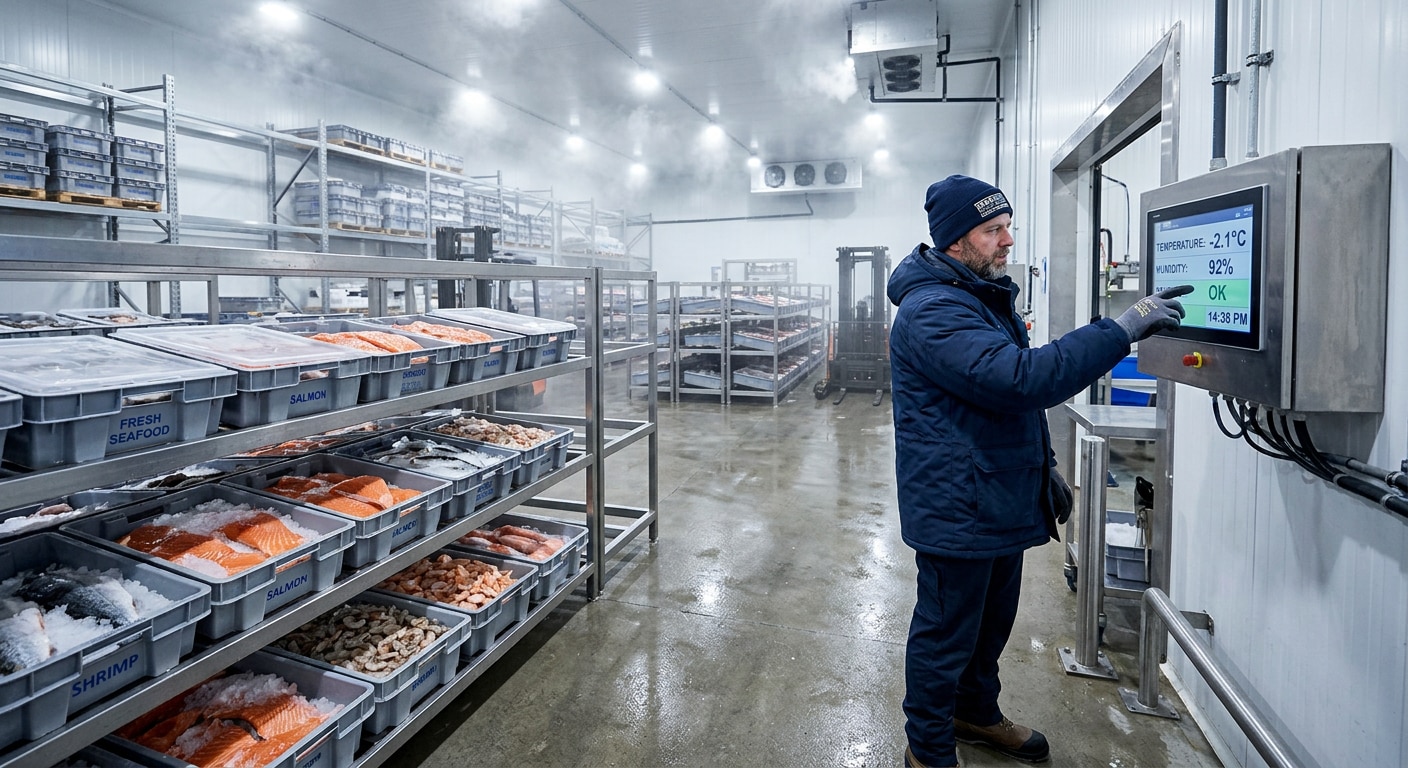
In the seafood and food processing industry, maintaining the right storage environment is just as important as maintaining the right temperature. While refrigeration systems are designed to keep products cold, they cannot always control excess moisture in the air. High humidity inside cold storage facilities can lead to freezer burn, condensation, microbial growth, damaged packaging, increased energy consumption, and even rejected export shipments.
For businesses involved in seafood processing, frozen food storage, pharmaceuticals, food manufacturing, or logistics, investing in a reliable industrial dehumidifier is one of the most effective ways to protect product quality and reduce operational costs.
At Dehumidifiers India, we offer high-performance White Westinghouse Industrial Dehumidifiers that are specially designed for continuous operation in demanding industrial environments.
Why Humidity Control Matters in Cold Storage
Cold storage facilities constantly experience changes in humidity. Every time warehouse doors open, warm humid air enters the storage area. Once this air meets cold surfaces, moisture condenses immediately, creating ideal conditions for frost, ice buildup, and condensation.
Processing activities such as washing, icing, cleaning, and packaging also increase indoor moisture levels. Without proper humidity control, excess moisture becomes a serious operational challenge.
Poor humidity management can affect:
Frozen seafood quality
Food safety standards
Export compliance
Refrigeration efficiency
Equipment lifespan
Packaging quality
Energy consumption
A dedicated industrial dehumidifier removes excess moisture before it becomes a problem.
The Hidden Cost of Excess Humidity
Humidity doesn't always create immediate problems. Instead, its effects build gradually, resulting in higher maintenance costs and product losses over time.
1. Freezer Burn and Product Damage
One of the biggest challenges in frozen seafood storage is freezer burn. When humidity levels fluctuate, moisture leaves the surface of frozen products, causing dehydration and discoloration.
Products affected by freezer burn often develop:
Dry texture
White or chalky patches
Poor appearance
Reduced shelf life
These defects reduce product value and can lead to shipment rejection by buyers.
2. Condensation Damages Packaging
Excess moisture forms condensation on ceilings, walls, equipment, and packaging materials.
Wet cartons, damaged labels, weakened packaging, and moisture inside boxes reduce the professional appearance of exported products while increasing handling issues during transportation.
3. Higher Energy Bills
Humidity forces refrigeration systems to work harder.
As moisture freezes on evaporator coils, refrigeration efficiency decreases significantly. Compressors run longer, consume more electricity, and require frequent maintenance.
Installing an industrial dehumidifier reduces moisture before it reaches cooling coils, allowing refrigeration equipment to operate more efficiently.
4. Ice Build-Up on Refrigeration Coils
Ice accumulation is one of the most common maintenance issues in cold storage warehouses.
When moisture freezes on evaporator coils, it causes:
Reduced airflow
Frequent defrost cycles
Longer compressor operation
Increased maintenance costs
Reduced equipment life
Industrial dehumidifiers minimize frost formation by controlling humidity before condensation occurs.
5. Food Safety and Hygiene
Food processing facilities must maintain strict hygiene standards.
High humidity creates favourable conditions for:
Mould growth
Bacteria
Fungal contamination
Surface condensation
Water dripping from ceilings and pipelines
These conditions increase contamination risks during processing and packaging.
Maintaining controlled humidity helps create a cleaner, safer production environment while supporting food safety compliance.
Why Refrigeration Alone Is Not Enough
Many facility owners assume refrigeration systems automatically remove moisture from the air.
In reality, refrigeration systems are designed primarily for temperature control.
Although they remove some moisture during cooling, they cannot effectively handle the high humidity levels found in coastal cities such as Mumbai, Chennai, Kochi, or Visakhapatnam.
A dedicated industrial dehumidifier continuously removes excess moisture, allowing refrigeration equipment to focus on cooling while maintaining optimal humidity levels.
The result is:
Stable storage conditions
Better product quality
Lower electricity consumption
Reduced maintenance costs
Longer equipment life
Export Compliance Starts with Humidity Control
Export-quality seafood must meet strict international standards.
Excess humidity can affect:
Product texture
Appearance
Packaging integrity
Microbial safety
Even if products remain frozen throughout storage, humidity-related damage can result in shipment rejection during quality inspections.
Maintaining controlled humidity helps businesses protect product quality while improving buyer confidence and supporting export compliance.
Choosing the Right Industrial Dehumidifier
Selecting the right dehumidifier depends on several factors:
Storage room size
Daily moisture load
Operating hours
Drainage requirements
Desired humidity levels
For continuous industrial operation, automatic drainage and high moisture removal capacity are essential.
At Dehumidifiers India, we offer a complete range of White Westinghouse Industrial Dehumidifiers suitable for warehouses, food processing plants, pharmaceutical facilities, manufacturing units, and cold storage applications.
Recommended White Westinghouse Industrial Dehumidifiers
Depending on your facility size and humidity requirements, we recommend the following models:
WDE-603T – 60 Litres/Day
Ideal for medium-sized cold rooms and food processing facilities requiring reliable humidity control.
WDE-606 – 60 Litres/Day
A dependable industrial solution designed for continuous moisture removal.
WDE-702 – 70 Litres/Day
Suitable for larger commercial storage spaces with moderate humidity loads.
WDE-100 – 100 Litres/Day
Designed for industrial warehouses and cold storage facilities requiring high-capacity moisture removal.
WDE-110P – 110 Litres/Day
Features electronic humidity control, making it suitable for facilities requiring precise humidity management.
WDE-110S – 110 Litres/Day
Includes an automatic motor drain pump for uninterrupted industrial operation.
WDE-150S – 150 Litres/Day
Perfect for large food processing plants and industrial manufacturing environments.
WDE-190S – 190 Litres/Day
Our highest-capacity industrial dehumidifier, designed for continuous heavy-duty applications.
Compact Commercial Models
For smaller storage rooms and commercial applications, we also offer:
These models provide efficient humidity control for offices, laboratories, retail spaces, archives, and smaller storage areas.
Industries That Benefit from Industrial Dehumidifiers
Our industrial dehumidifiers are widely used in:
Cold Storage Warehouses
Seafood Processing Plants
Food Manufacturing Units
Pharmaceutical Facilities
Chemical Industries
Textile Manufacturing
Warehouses
Logistics Centres
Printing Industries
Packaging Units
Hospitals
Laboratories
Why Choose Dehumidifiers India?
At Dehumidifiers India, we supply premium-quality White Westinghouse Industrial Dehumidifiers engineered for Indian environmental conditions.
Our solutions provide:
High moisture removal capacity
Energy-efficient operation
Continuous industrial performance
Automatic drainage options
Easy installation
Reliable after-sales support
12-month warranty on industrial models
Whether you operate a cold storage warehouse, seafood processing unit, pharmaceutical facility, or manufacturing plant, our experts can recommend the right humidity control solution for your business.
Protect Your Products Before Humidity Becomes a Problem
Humidity-related damage often goes unnoticed until products are rejected, refrigeration costs rise, or maintenance expenses increase. Investing in the right industrial dehumidifier helps maintain product quality, improve operational efficiency, and reduce long-term costs.
If you're looking for the best industrial dehumidifier for your facility, our team is here to help.
Talk to Our Team–
📞 Give us a call at 08048038959. Please keep 0 before dialling the number.
✅ Free consultation - provide us with the details of your cold storage, and we'll give you a recommendation for capacity and placement.
🎯 Free product demonstration - only available in Mumbai; see a dehumidifier in action at your facility before making a purchase decision.
🛠️ Explore our inventory of commercial dehumidifiers.
Explore our complete range of Industrial Dehumidifiers and let our specialists help you choose the ideal solution for your cold storage or processing facility. Visit our Contact Us page today to get started.
