

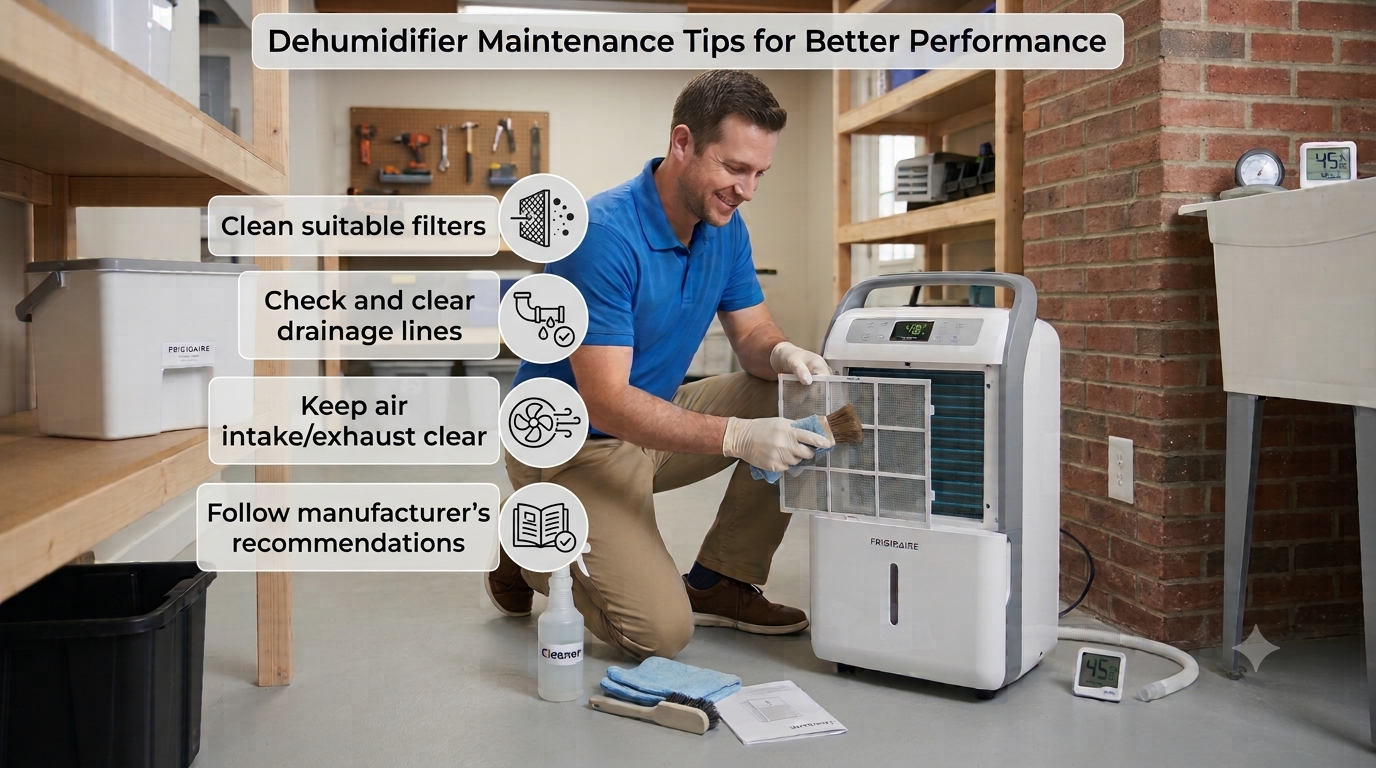
A dehumidifier plays an important role in maintaining comfortable indoor conditions by controlling excess moisture in the air. Whether used in residential buildings, commercial spaces, offices, warehouses, or industrial facilities, a properly functioning dehumidifier helps maintain suitable humidity levels, protect equipment, and create a better indoor environment.
In areas where humidity levels are high, regular dehumidifier maintenance becomes even more important. Dust accumulation, clogged filters, drainage problems, and restricted airflow can affect equipment efficiency and reduce moisture removal performance.
If you are using a dehumidifier in @location, following a proper maintenance routine can help ensure consistent performance and reliable operation. Regular servicing and timely inspections also help prevent unexpected breakdowns and unnecessary repair expenses.
Here are some essential dehumidifier maintenance tips to help improve equipment efficiency and extend its operational life.
1. Clean Dehumidifier Filters Regularly
Air filters are essential components of every dehumidification system. They help prevent dust, dirt, and airborne particles from entering the equipment and affecting internal components.
Over time, accumulated dust can restrict airflow, forcing the dehumidifier to work harder. This may reduce moisture removal efficiency and increase energy consumption.
To maintain optimal performance, inspect and clean the filters regularly according to the manufacturer's recommendations. Depending on the filter type, cleaning or replacement may be required.
For businesses operating commercial and industrial dehumidifiers in @location, regular filter cleaning is especially important because equipment may operate for extended periods in demanding environments.
Proper filter maintenance helps improve airflow, maintain dehumidifier efficiency, and support effective humidity control.
2. Check the Dehumidifier Drainage System
The drainage system plays an important role in the moisture removal process. As a dehumidifier extracts moisture from the air, collected water must be discharged properly.
A blocked drainage pipe or full water collection tank can interrupt equipment operation and potentially cause water leakage.
Follow these maintenance practices:
Empty the water collection tank regularly.
Check drainage pipes for blockages.
Inspect drainage connections for leakage.
Ensure that water flows freely through continuous drainage systems.
Clean the drainage components according to manufacturer instructions.
If you operate an industrial dehumidifier in @location, regular drainage inspections can help prevent operational interruptions and maintain continuous moisture control.
3. Keep Air Inlet and Outlet Areas Clear
Proper airflow is necessary for effective dehumidification. The equipment draws humid air through its inlet, removes excess moisture, and releases treated air through the outlet.
Blocked air pathways can affect the performance of the dehumidifier and reduce its moisture extraction capacity.
Always maintain sufficient clearance around the equipment. Avoid placing furniture, boxes, curtains, or other objects near the air inlet and outlet.
For commercial and industrial applications in @location, ensure that dehumidifiers are installed in suitable locations with adequate ventilation and air circulation.
Maintaining unrestricted airflow helps improve dehumidifier performance and supports consistent humidity management.
4. Inspect the Dehumidifier for Visible Damage
Routine equipment inspections can help identify minor problems before they become major maintenance concerns.
Check the external body, electrical cables, accessible connections, and drainage components for visible signs of damage or wear.
Pay attention to unusual sounds, excessive vibrations, water leakage, or unexpected changes in equipment performance.
If you notice any abnormal operating conditions, switch off the equipment when safe and contact a qualified service professional.
Regular inspections help maintain dehumidifier reliability and reduce the possibility of unexpected equipment failure.
5. Monitor Indoor Humidity Levels
Monitoring relative humidity is essential for maintaining effective humidity control.
Different environments require different humidity levels depending on their purpose and operating conditions. Residential buildings, manufacturing facilities, warehouses, pharmaceutical storage areas, and commercial establishments may have different humidity control requirements.
Use the built-in humidistat or a suitable humidity measuring device to monitor indoor moisture levels.
If your dehumidifier is running continuously without achieving the required humidity level, inspect the equipment settings, airflow, and surrounding environmental conditions.
For industries and businesses in @location, effective humidity monitoring can help protect stored materials, machinery, products, and other moisture-sensitive assets.
6. Follow Manufacturer Maintenance Recommendations
Every dehumidifier has specific maintenance requirements based on its design, technology, capacity, and application.
Following the manufacturer's instructions helps ensure that cleaning, inspection, and servicing activities are performed correctly.
Important maintenance recommendations include:
Follow the recommended filter cleaning schedule.
Use suitable cleaning methods and materials.
Check operating conditions regularly.
Maintain proper ventilation around the equipment.
Follow the recommended inspection and servicing intervals.
Avoid attempting internal repairs without proper technical knowledge. Professional assistance is recommended for electrical and mechanical maintenance.
Following manufacturer guidelines helps improve equipment reliability and maintain long-term dehumidifier performance.
7. Schedule Regular Dehumidifier Servicing
Regular professional servicing is important for maintaining the performance of commercial and industrial dehumidification systems.
Although basic cleaning can be performed during routine maintenance, internal components may require professional inspection.
Professional dehumidifier servicing may include:
Inspection of internal components.
Checking electrical connections and controls.
Examining airflow and filtration systems.
Inspecting drainage arrangements.
Identifying unusual noise and vibration.
Evaluating overall equipment performance.
If you are looking for reliable dehumidifier service in @location, professional maintenance support can help identify potential issues and maintain dependable equipment operation.
8. Avoid Operating the Dehumidifier Beyond Its Capacity
Every dehumidifier is designed to handle a specific moisture removal capacity under defined operating conditions.
Using equipment in an area that exceeds its recommended capacity may result in longer operating hours and reduced humidity control effectiveness.
Factors such as room size, moisture generation, air leakage, ventilation, and environmental conditions can influence equipment performance.
Always select a dehumidifier based on the requirements of your application. If the equipment is unable to maintain the desired humidity level, consult a professional to evaluate its capacity and operating conditions.
Choosing the right industrial dehumidifier in @location can help maintain effective moisture control and support better operational efficiency.
Benefits of Regular Dehumidifier Maintenance
Maintaining your dehumidifier regularly offers several advantages for residential, commercial, and industrial applications.
Improved moisture removal: Clean filters and proper airflow support effective dehumidification.
Better energy efficiency: Routine maintenance helps prevent unnecessary equipment strain.
Reliable equipment operation: Regular inspections help identify potential problems early.
Longer equipment lifespan: Proper care helps protect essential components.
Reduced downtime: Preventive maintenance helps minimise unexpected interruptions.
Consistent humidity control: Well-maintained equipment supports stable indoor humidity levels.
For businesses in @location, regular industrial dehumidifier maintenance can contribute to better moisture management and reliable day-to-day operations.
Conclusion
Regular dehumidifier maintenance is essential for maintaining efficient moisture removal, reliable performance, and long-term equipment operation. Simple practices such as cleaning air filters, checking drainage systems, maintaining clear airflow pathways, monitoring humidity levels, and following manufacturer recommendations can significantly improve equipment performance.
Whether you use a residential, commercial, or industrial dehumidifier, following a consistent maintenance schedule helps prevent common operating issues and supports effective humidity control.
If you are looking for professional dehumidifier maintenance, servicing, or technical assistance in @location, JET INDIA is here to help.
Need support for your dehumidifier? Contact JET INDIA for service assistance and solutions to maintain reliable dehumidifier performance.